Two kinds of glare, two causes
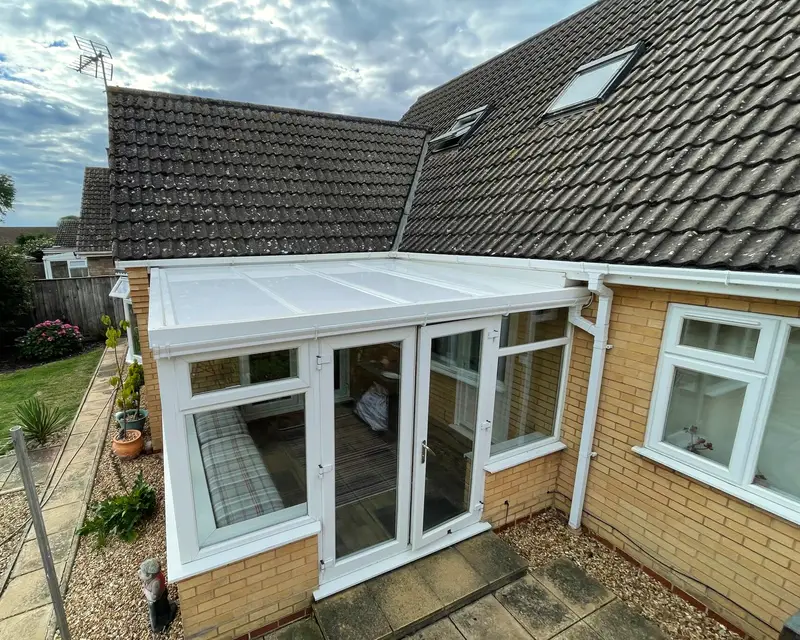
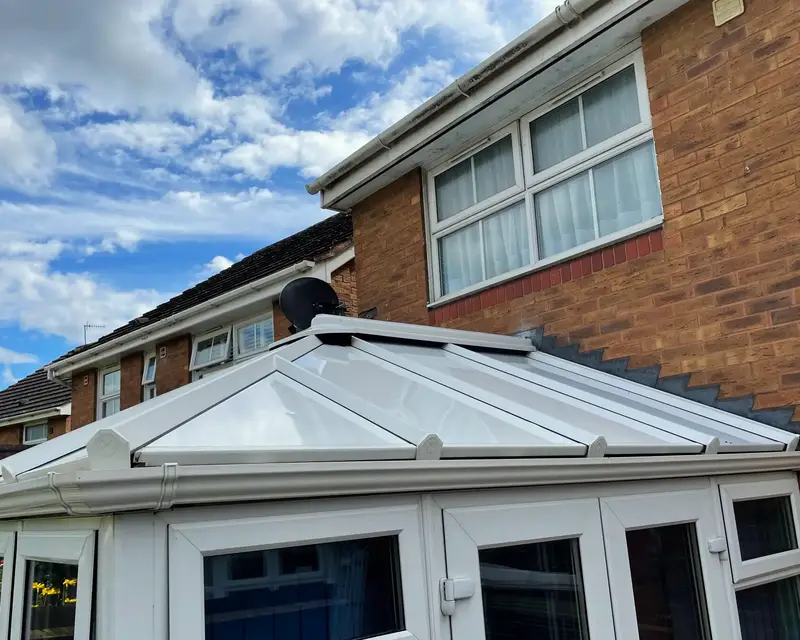
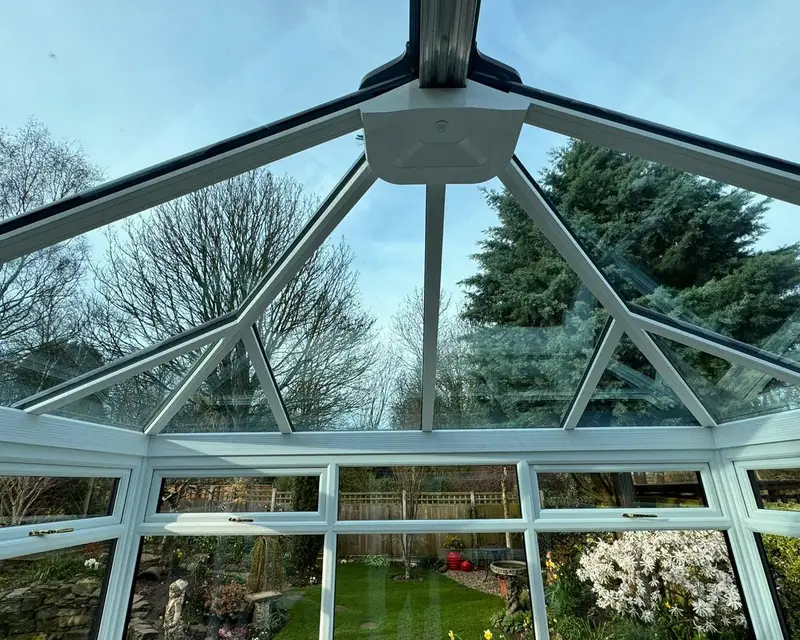
Overhead glare is the white, flat brightness you get under polycarbonate even on a cloudy day. The flutes in the sheet scatter the light, so the roof glows evenly from end to end. Clear glass is worse at midday, when the sun itself sits in the roof and throws hard shadows and hot patches across the floor.
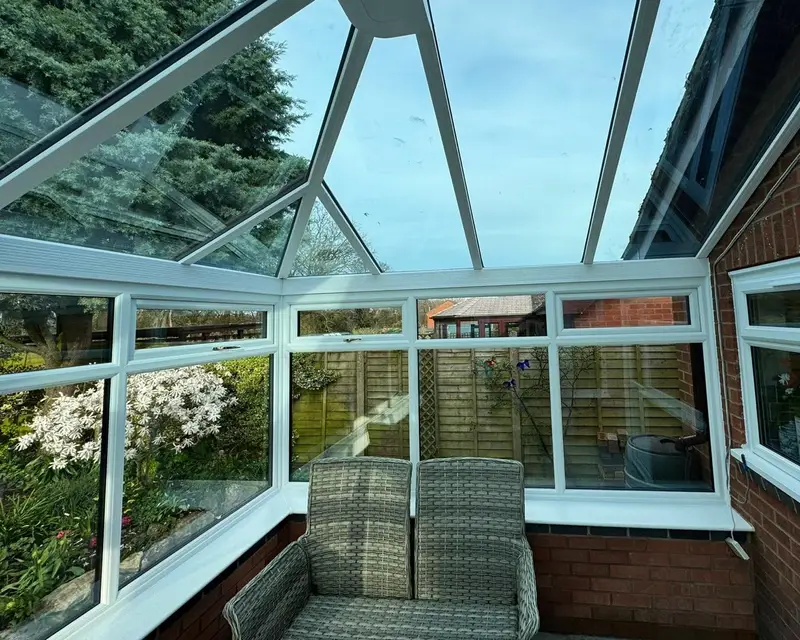
Side glare comes in low through the walls, mostly in the early morning, late afternoon and all through winter when the sun never climbs high. It lands straight in your eyes or across the television.
Overhead glare is why phones and laptops are hard to read in a conservatory at noon. A screen can only be so bright, and a roof full of daylight is brighter. There is more on screens in watching TV in a conservatory.
A quick test to find the source
Pick a sunny day and sit where you normally sit. Hold a large book flat above your head, like a small roof. If the glare drops sharply, the roof is the source. If it does not, turn to face the brightest wall and hold the book up beside your face. If that helps, it is side light.
Do it twice: once at about 1pm and once in the late afternoon. Most rooms show roof glare in the middle of the day and wall glare later on. Your phone helps too. Look at a white screen at full brightness in each spot, and you will see where it washes out.
| Book above your head | Book beside your face | |
|---|---|---|
| Glare drops a lot | Roof glare. A different roof fixes it. | Side glare. Blinds on the walls help. |
| Glare drops a little | Both at once, common at midday | Mostly roof light bouncing off pale floors |
| No change | Reflections from a shiny floor or table | Light bouncing off a neighbouring wall or window |
Cheap things that help
- Turn the screen. A television against the house wall, facing away from the garden, faces less of the light. It is free and it often does more than anything else on this list.
- Matt surfaces. A rug over a glossy floor and a cloth on a glass table cut the bounce.
- Roof blinds. Pleated or roller blinds under the roof take the edge off midday glare. Pale ones still glow; darker ones make the room gloomy.
- Tinted film. Cuts brightness on glass roofs, but can look patchy and fade.
- Wall blinds for low sun. For side glare, a simple roller blind on the worst window is the right tool.
For a fuller look at blinds, film and what they cost against a roof change, see blinds and film or a new roof.
When the roof is the only real fix
If the book test says roof, and blinds have made the room dim without making it comfortable, you have run out of cheap moves. The light is arriving from the largest surface in the room, at the angle your eyes are worst at dealing with. You can dim it, but you cannot aim it.
Glare and heat usually travel together. A roof that floods the room with light also floods it with warmth: our model has a typical south facing polycarbonate room at 33°C at 3pm in an average July and a glass one at 34°C. You can check your own town on the Comfort Calendar.
- 33°C
- July 3pm under polycarbonate
- 34°C
- July 3pm under glass
- 25°C
- July 3pm under the panel roof
What the panel roof changes
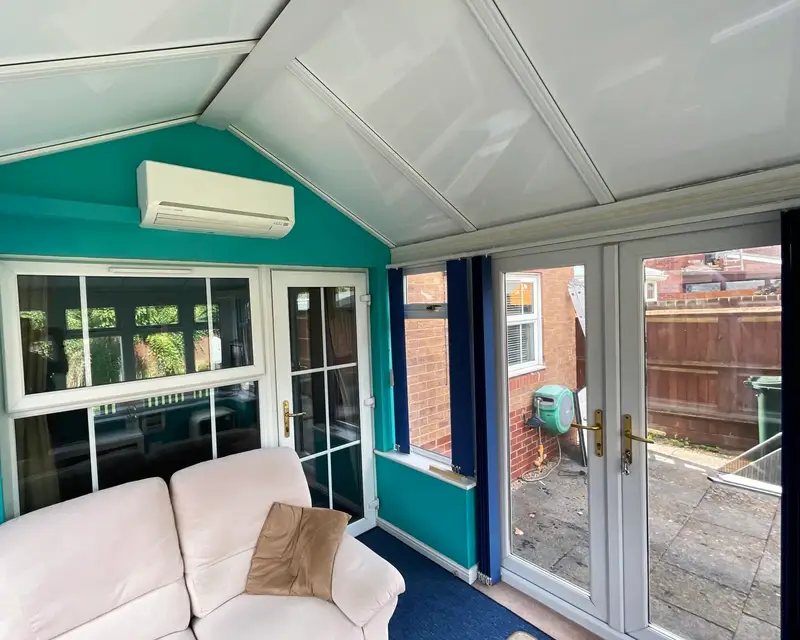
The panels are opaque, with a smooth white ceiling inside. Light now enters through the walls only, so it comes from the side, the way it does through a window in your lounge. Shadows soften, screens become readable, and nothing bright hangs over your head.
The honest trade is brightness. The room will be darker than it was, especially at midday, and some people miss the sky. A white ceiling helps by bouncing wall light around, and one or two roof lights can bring a patch of sky back without bringing the whole glare back with it. Choose their position with care: a roof light above the sofa puts a little of the old problem right where you sit.
Low winter sun through the side glass is unchanged. That is a job for a blind on one window, not for the roof. If plants are part of your room, read whether plants grow under a solid roof before you decide.
Next step
The guide prices show what a roof costs by size, from £3,000. If you would like a fixed written price for your room, start your quote and we will arrange a free survey.