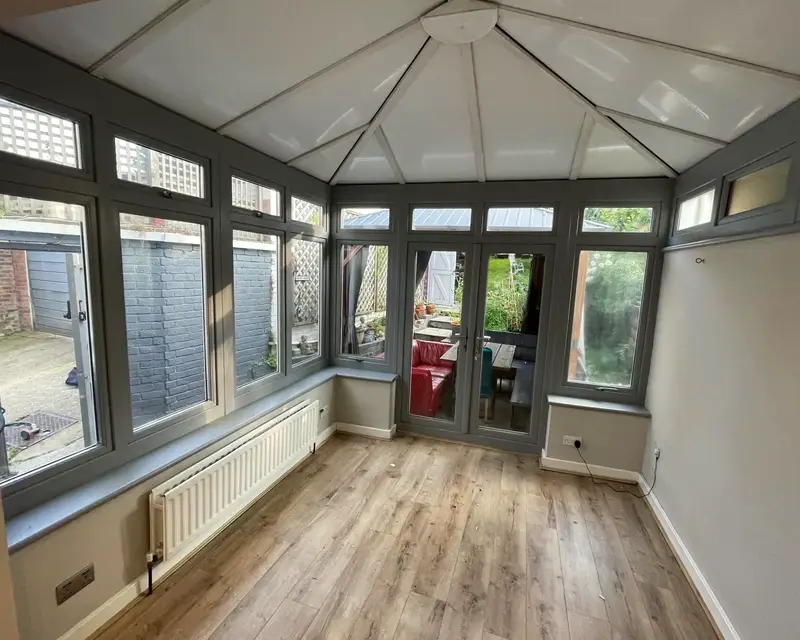
The four outside colours
- White. The classic match for a white uPVC frame. It reads as clean and light from upstairs windows and reflects the most sun.
- Light grey. A softer alternative that hides the odd streak of dust better than white, and sits well with grey or cream frames.
- Anthracite grey. The dark, modern choice, popular on newer homes with grey windows.
- Copper tone. A warm metallic shade that suits brick houses and wood effect frames.
Trims, ridges and edge caps can follow the panel colour, or come in white if you want the outline to match the frame instead. You can see real finished roofs in each colour on our before and after photos.
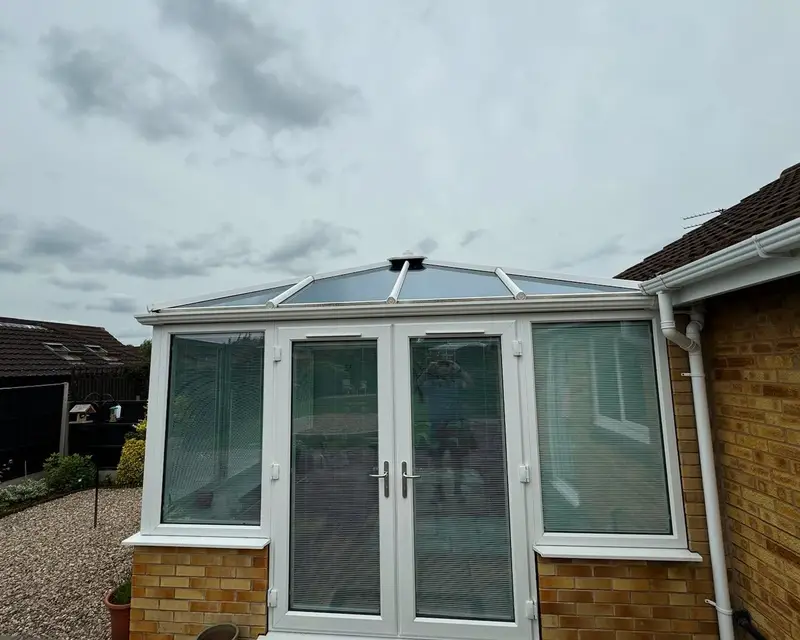
Living with oak effect and rosewood frames
Many conservatories from the 1990s and 2000s were built with wood grain foils on the frame: golden oak effect, darker rosewood, or white inside with wood grain outside. The roof colour you choose should get along with that frame, because the frame is staying.
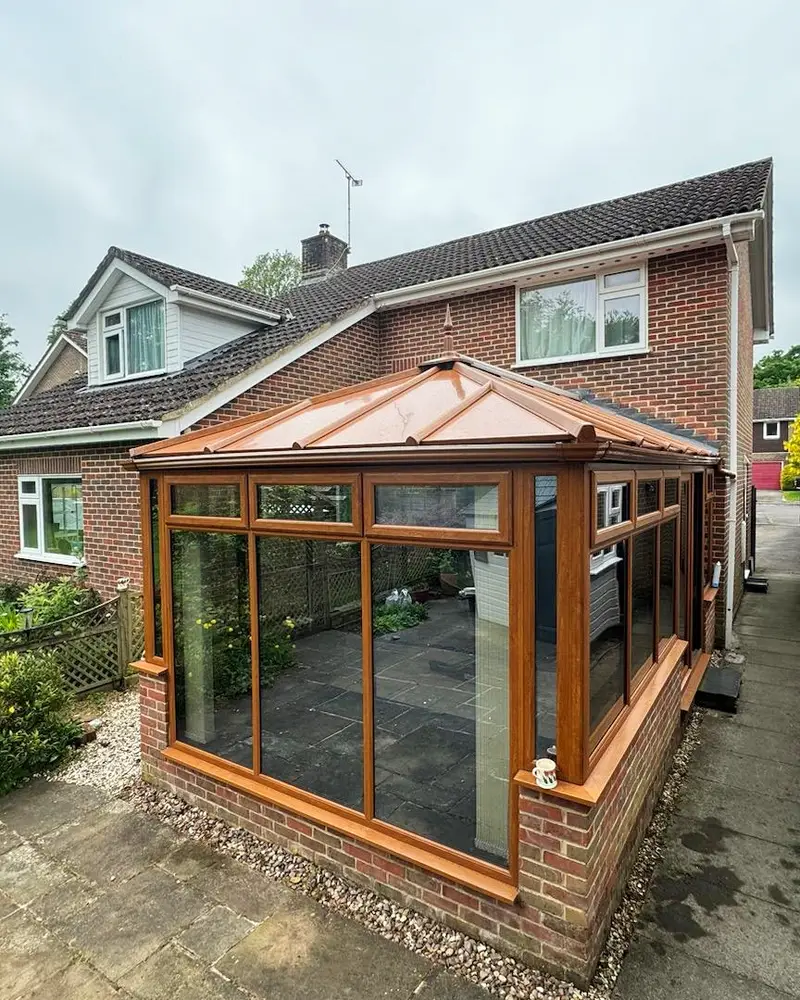
Copper tone flatters oak effect, picking up the warm notes in the grain. Anthracite works with rosewood for a deep, strong look, and white keeps things light if the frame already feels heavy. Inside, oak effect glazing bars framing white panels give a beamed ceiling look many owners like more than they expected.
Does a darker roof make the room hotter?
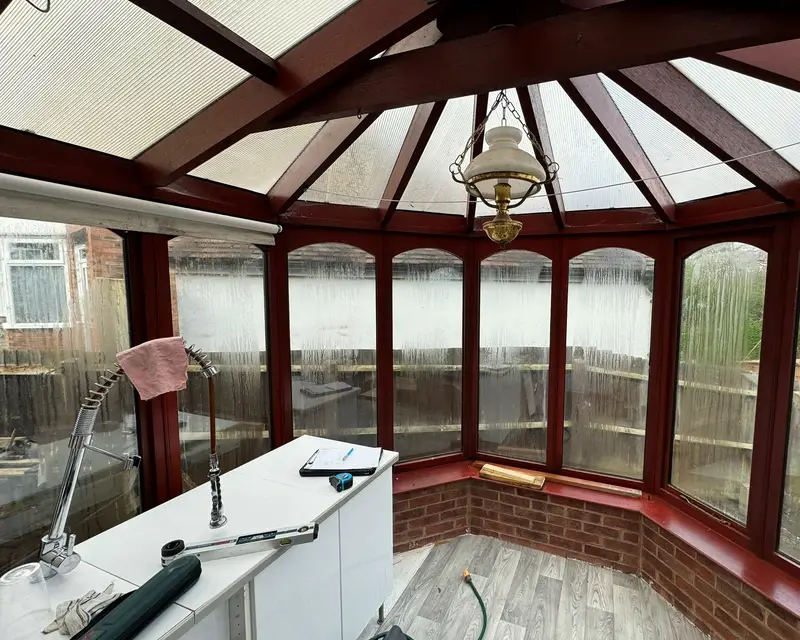
A dark surface soaks up more sunshine than a pale one, so on a bright July day an anthracite top skin gets much hotter to the touch than a white one. That part is true. The question is how much of it reaches you.
Very little. Heat has to cross 75 mm of foam to get in, and at a U-value of about 0.43 it barely trickles. Our own rough sum for a 15 m² roof in strong midday sun puts the difference between a white top and an anthracite one at around 150 watts reaching the room: about one and a half old style light bulbs spread over the whole ceiling. Compare that with the several kilowatts a clear roof lets in, which is what the Comfort Calendar model shows as 47°C peaks under polycarbonate and 34°C under panels.
| Top colour | Share of sun soaked up | Top skin in July sun | Effect in the room |
|---|---|---|---|
| White | about a quarter | warm | the least |
| Light grey | about half | hot | slight |
| Copper tone | about two thirds | very hot | slight |
| Anthracite grey | most of it | very hot | small, roughly 150 W more than white |
Inside: the white ceiling
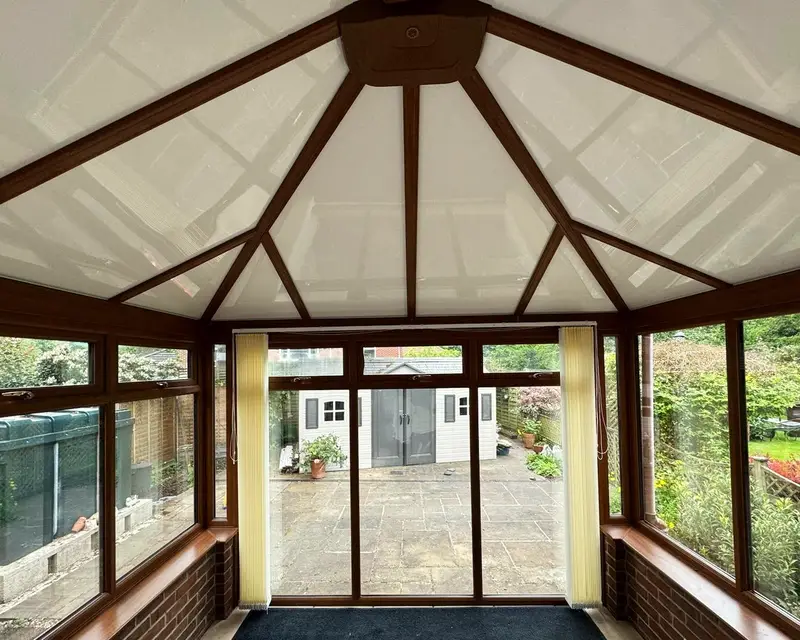
Whatever the outside colour, the inner aluminium skin of each panel is a smooth white finish. There is nothing to paint, plaster or board. It bounces daylight from the glass walls around the room, which is why a room under a solid roof often feels brighter at eye level than people fear.
The ceiling follows the shape of the roof, so a lean-to gets a gentle slope, and a Victorian gets a faceted dome rising to a central hub. That hub is a natural place for a pendant or chandelier.
Gutters, trims and the small things
A roof looks finished or unfinished at its edges. Ridge caps, end caps and the flashing trim along the house wall all come colour matched. If your gutters are cracked or have faded to a different white from the frame, swapping them while the roof is off costs less than doing it later, and lets them match the new edges. Gutter swaps are priced separately on the roof replacement price guide.
Every joint is sealed before its cap goes on, so the finished lines are straight and the colour runs unbroken from ridge to gutter.
Roof lights and spotlights
A roof light is a glazed panel set between the insulated ones. One or two keep a patch of sky over a dining table or a plant corner without bringing back the full heat of a clear roof. LED spotlights fit flush into the panels, wired as the roof goes on, so evenings get even light with no cables trailing. Both are planned at survey, so start your survey request with a rough idea of where you would like them.