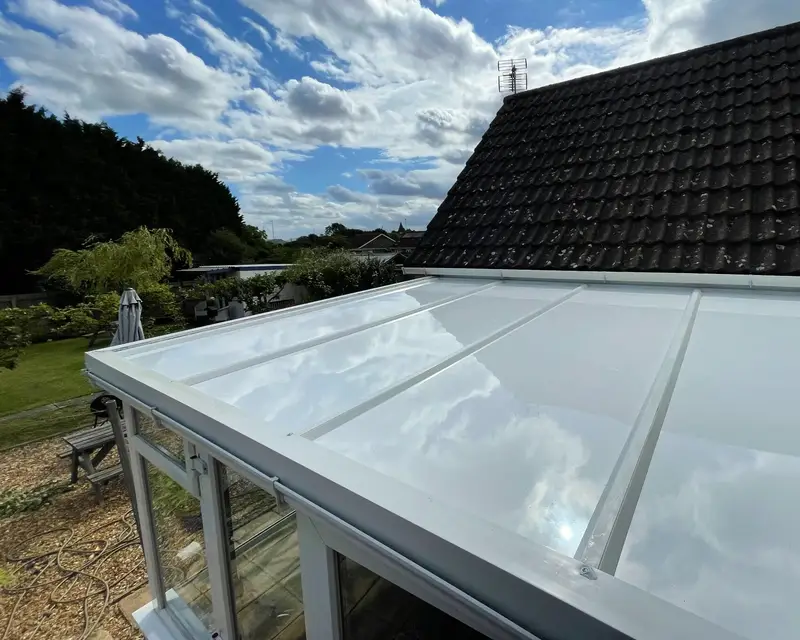
Step one: the online guide price, about a minute
The quote journey asks seven short things: what covers the roof today, its shape, the rough size, when you would like it done, your postcode, your name and how to reach you. A guide price appears on screen straight away, worked out from the same bands on our prices page. A small lean-to starts from £3,000, a medium roof from £4,000 and a large one from £5,000.
A guide price is a starting figure, not a promise. It cannot see the state of your frame or how awkward the access is down the side of the house. That is what the survey is for, and nothing is paid before it.
From enquiry to fitting day
- Guide priceAnswer seven questions online and see a starting figure for your size and shape.
- SurveyAn hour at your house: tape measure, frame check, colour samples.
- Written priceA fixed figure in writing, with every extra listed separately.
- BookingYou pick a date that suits. We confirm it and send a reminder the week before.
- Fitting dayOld roof off, panels on, sealed and tidied, usually inside one working day.
Step two: the survey, about an hour at your house
The surveyor has three jobs on the visit. First, measuring: every glazing bar, the ridge or hub, the wall plate along the house wall, and the overhang at the gutter. Panels are cut to these numbers, so a few millimetres matter.
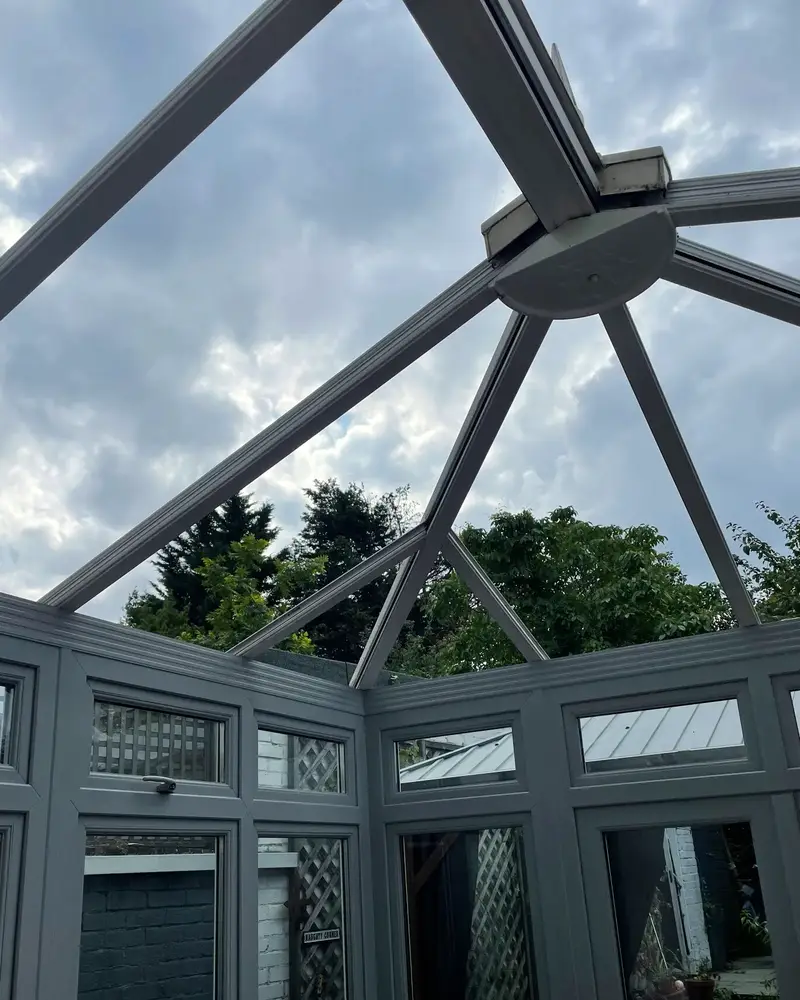
Second, the frame check. Our panels sit on the frame you already have, so the surveyor looks for anything that would spoil the result: a sagging bar, a soft spot in the sill, a gutter that has dropped. A frame that is square and dry usually passes. If something needs attention, you hear about it now, with a price, not on the day.
Third, the look. You see real samples of the finishes (white, light grey, anthracite and a few others on our colours and finishes page), decide on roof lights or LED spotlights, and talk through where any pendant should hang. Planning is covered here too: most roof swaps on an existing conservatory do not need planning permission, and we check your situation at the survey.
Step three: a fixed written price, then a date
Within a few days you get the price in writing. It is one figure for the roof, with any extras (roof lights, spotlights, frame repairs) listed line by line so you can strike out what you do not want. The price does not creep up afterwards unless you change the job.
When you are happy, you pick a fitting date. Panels are made to your measurements after you book, so there is a short gap while they are cut. The week before, we confirm the arrival time and ask you to clear the room.
The fitting day, hour by hour
Times move a little for bigger roofs and wet mornings, but a typical day for a medium roof runs like this.
- 8am: the team arrives, parks, and walks the room with you. Anything left inside gets covered with dust sheets and the floor is protected.
- 8.30 to 10.30am: the old roof comes off, sheet by sheet or pane by pane. It is stacked on the drive and taken away for recycling where possible.
- 10.30 to 11.30am: the bare frame gets a close look. Fixings are tightened, any small damage the survey flagged is made good, and the wall plate is prepared for the first panel.
- 11.30am to 2pm: panels go in, one beside the next, each screwed down to the bars below. You can watch the room go from bright to calm in about two hours.
- 2 to 3pm: the ridge or hub caps, the trims and the edge pieces where the roof meets the wall.
- 3 to 4pm: each joint gets its bead of sealant, and the gutters go back on (or new ones go up), then get a bucket of water poured through as a test.
- 4pm onwards: dust sheets up, the room hoovered, a walk round with you inside and out, and the guarantee paperwork explained.
Rain does not cancel the day on its own; we watch the forecast in the days before and only move the date if a downpour would land while the roof is open.
When it takes two days
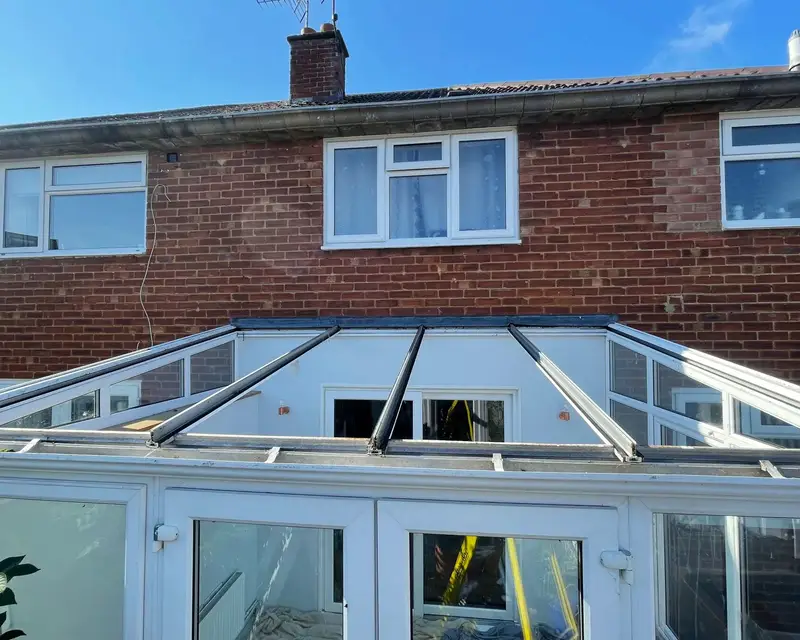
Large roofs, P-shapes and Victorian bays with lots of facets run into a second day. The roof is never left open overnight: by the end of day one, the frame is fully covered and watertight, and day two is for caps, trims, sealing and gutters. You can use the house as normal in between, and the conservatory door simply stays shut.
| Typical roof | Fitting time | |
|---|---|---|
| Small | Lean-to up to 12 m² | One day, often done by 3pm |
| Medium | 12 to 25 m², Edwardian or Victorian | One full day |
| Large | Over 25 m², gable end | One long day or two |
| P-shape | Two roofs joined in an L | Two days |
After the team leaves
The first thing most people notice is the quiet. Rain that used to drum now lands on 75 mm of foam. The second thing shows up on the first sunny afternoon: in our model the hottest hour of the year falls from 47°C under polycarbonate to 34°C under panels, and you can check your own town on the Comfort Calendar.
There is nothing to do for the first few weeks except let the sealant cure. After that, looking after the roof takes one rinse a year, set out on our aftercare page along with what the 10 year guarantee covers.
- 47°C
- hottest hour under polycarbonate
- 34°C
- hottest hour under panels
- 76%
- fewer too-warm waking hours