The three things the team needs from you
Everything else on the day is ours to sort out. These three are not, because they depend on your house:
- Access. The roof comes off from outside, and new panels go up the same way. If there is a side gate wide enough to carry a long panel through, the team uses that and the house stays shut. If the garden can only be reached through the house, we lay dust sheets along the route and keep the conservatory side of the house shut off while we work.
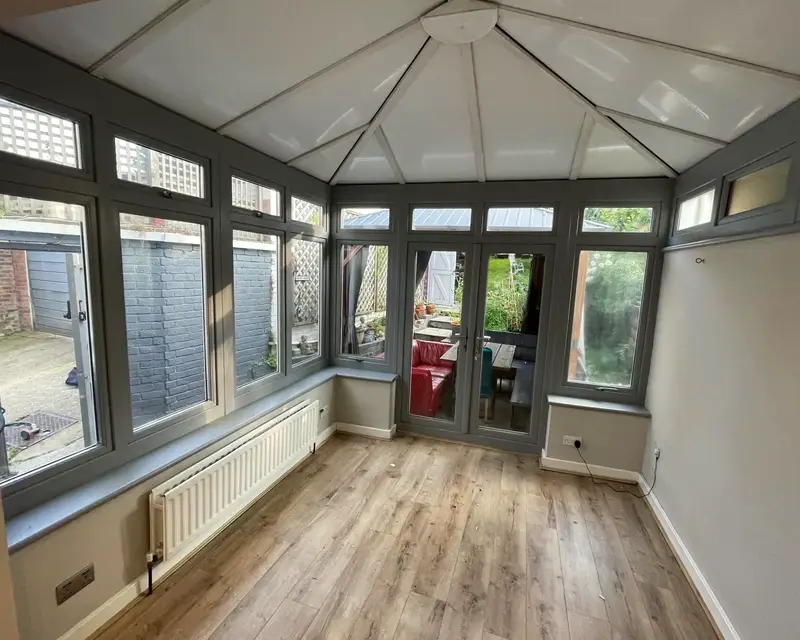
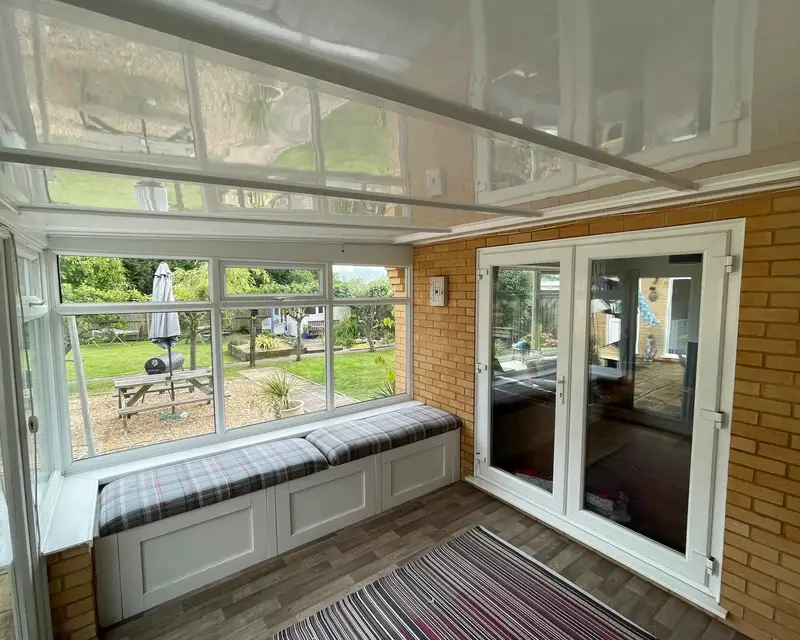
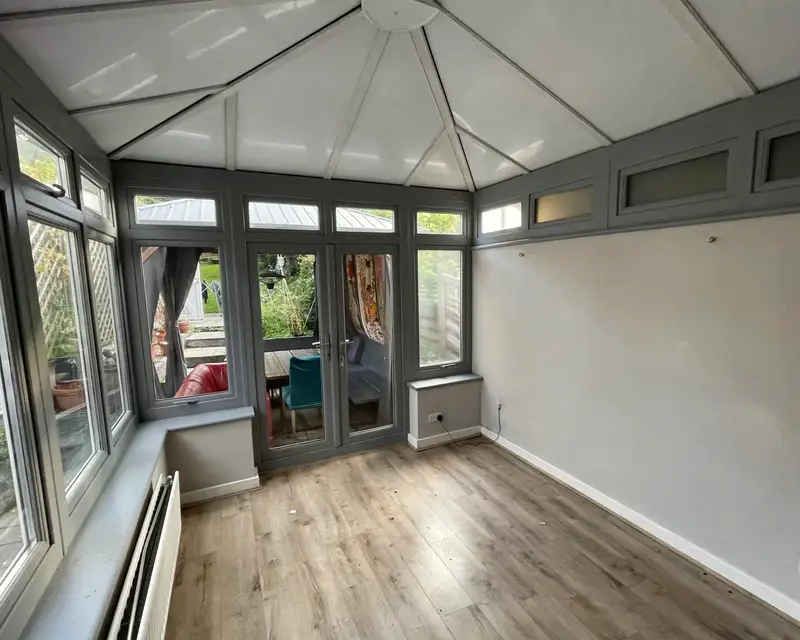
- An empty room. Sofas, plants, rugs, curtains and anything hanging from the old roof need moving out before we arrive. Small debris and sealant drips can fall during the strip, and the team needs to stand ladders inside.
- Power. One working socket, in the room or close by, runs the drills and saws. An outside socket is ideal; otherwise an extension lead through a window works.
What a two day job looks like
Bigger and more complicated roofs, such as a Victorian bay or a P-shape, tend to run into a second day. A small lean-to is often done in one. Here is the usual shape of the job:
| Day one | Day two (if needed) | |
|---|---|---|
| First thing | Arrive, walk round with you, lay sheets, set up | Arrive, quick check of the overnight cover |
| Morning | Strip the old roof bay by bay, check the frame | Fit the remaining panels |
| Afternoon | First panels on, any section left open is covered | Trims, caps, sealing, guttering, lights wired if ordered |
| End of day | Site tidied, room weathertight overnight | Walk round with you, clean up, hand over |
Why the start and the end matter
At the start of the first day the team lead goes over the plan with you: which way they will come in, where the van parks, which socket to use, and whether anything has changed since the survey. It takes ten minutes and saves an hour of guessing.
At the end of the last day you walk round together. Look up at the new ceiling, check the flashing along the house wall, try any lights that were added and ask about anything you are not sure of. This is also when you get the guarantee details, which our aftercare page explains.
If nobody can be in at those times, tell us when booking. A neighbour or family member with a key works fine, as long as they know where the socket is and can do the walk round.
A checklist for the night before
Most of the preparation takes an evening:
Getting ready for the fitting team
- Clear the roomMove furniture, plants and rugs into the house or garage, and take down anything fixed to the old roof such as blinds or a fan.
- Open the routeUnlock the side gate, move bins and bikes, and clear a path round the house to the conservatory.
- Leave space for the vanA spot on the drive or close by keeps the walk with long panels short.
- Pick a socketCheck the one nearest the conservatory works, ideally on a circuit that does not also run the freezer.
- Sort out petsKeep dogs and cats indoors or away from the gate, which will be open a lot.
- Tell the neighboursA word over the fence about ladders and a van for a day or two goes a long way.
Carrying on indoors while it happens
You can carry on as normal in the rest of the house. Expect some noise during the strip in the morning, mainly drilling and the clatter of old caps coming off, and then far less once panels start going on. The internal conservatory door stays closed throughout, so the dust stays on our side of it.
If the weather turns, the team covers any open sections before stopping, and we cover what happens then on our page about fitting a roof in wet weather. For the whole job from survey to handover, see the fitting day.