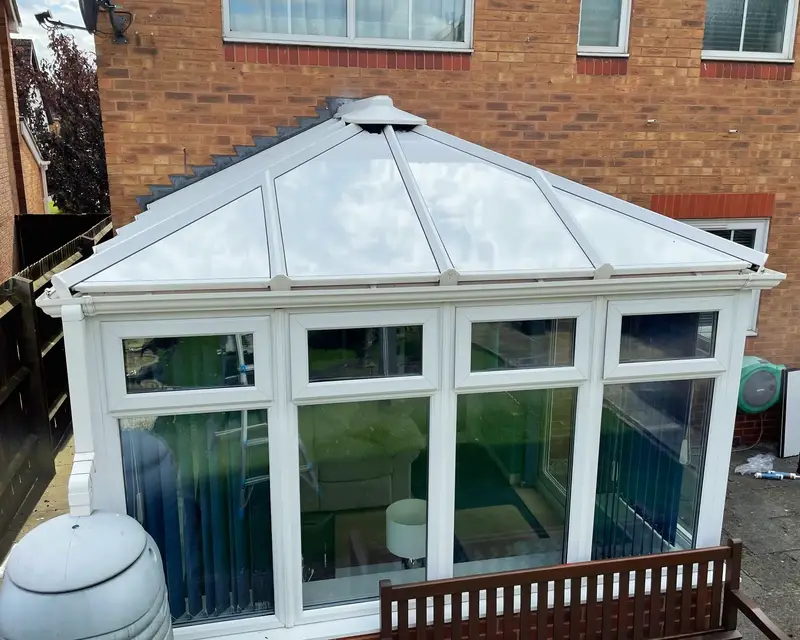
Why rain is a problem for only a few hours
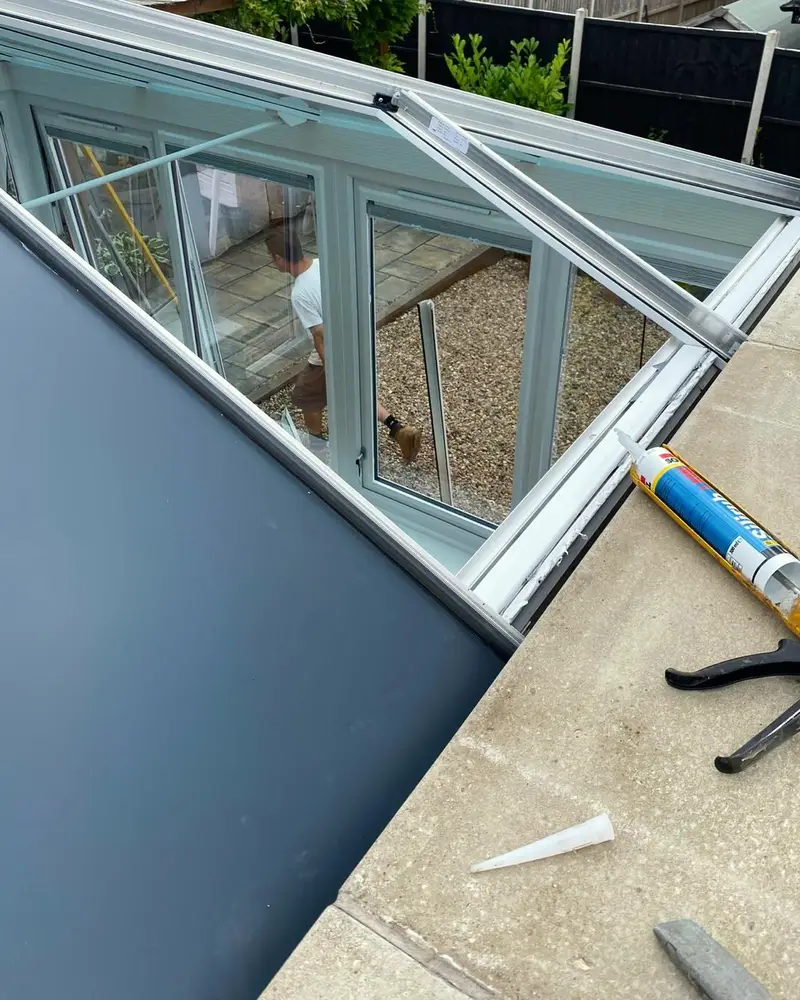
The roof does not come off in one go. Each bay between two glazing bars is stripped and refilled before the next one is opened, so most of the time the room has either the old roof or the new one over it. On a typical lean-to only one or two bays are open at any moment.
If a shower arrives, the open section is covered with a heavy sheet tied down to the frame, and the team waits it out. Rain in the room during that window lands on an empty floor, because the room was cleared before we started. Our page on being home on fitting day covers what to move out.
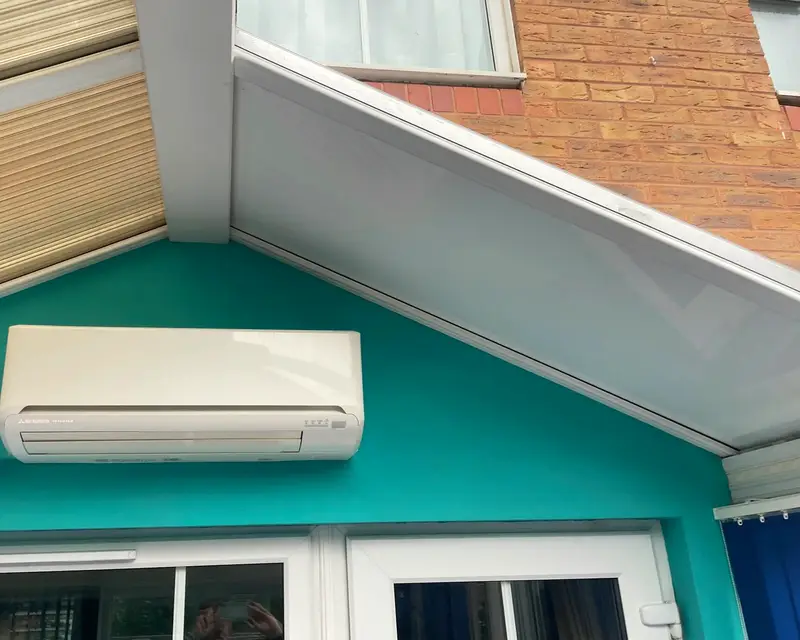
What different weather means for the day
Here is how the team reads the morning sky. The deciding question is always whether every joint can be sealed on a dry surface before the end of the day.
| Do we carry on? | Why | |
|---|---|---|
| Dry and calm | Yes | Ideal for stripping, fitting and sealing |
| Light drizzle | Usually | Panels are covered as they go; sealing waits for a dry spell |
| Passing showers | Usually, with pauses | Open bays are covered during each shower |
| Steady heavy rain all day | No, we rebook | Sealant and tapes will not bond to wet surfaces |
| Strong gusty wind | No, we rebook | A large panel on a ladder catches the wind like a sail |
| Frost on the frame | Later start | Ice on the bars is a slip risk and stops sealant curing |
Sealant needs a dry day, not a sunny one
The panels themselves do not mind water. They are aluminium on both faces with a foam core, and they spend the next few decades in the rain. The weak point on the day is the sealing. Every joint between panel and bar, and along the house wall flashing, is sealed with a bead of sealant and covered with a cap. Sealant bonds well to clean, dry metal and plastic, and badly to a wet film. A joint sealed in the rain is a joint that may let water in a year later.
That is why the team can fit panels in a light shower but will often leave the final sealing until it has been dry for a while, wiping the joints down first. The fitting day page shows each step in order.
Overnight and on a two day job
If the roof runs into a second day, the room is made weathertight before the team leaves. Either the panels already fitted are sealed and capped, or any part left open is covered and tied down. You will not go to bed with rain falling on the floor.
The next morning the team checks the cover, dries anything that needs drying and carries on. A wet night does not undo the first day's work.
Moving the date
If the forecast for the day looks bad, we let you know as early as we can and move the booking to the next suitable slot. The written price from the survey does not change because the date did. Autumn and winter fittings are perfectly normal, since a dry and still day turns up in most weeks of the year, and short winter days simply mean an earlier start.
Many people book the roof in autumn so the room is ready for the first cold spell. Our model shows why that makes sense: the heater needed to hold 19°C at 0°C outside drops from 1.7 kW to 1.1 kW, and you can check your own town in the Comfort Calendar.
Fitting goes ahead
- Dry or drizzly morning
- Wind light enough to carry panels safely
- Showers expected to pass by lunch
We move the booking
- Heavy rain forecast all day
- Gusts strong enough to lift a panel
- Ice that will not clear before mid morning