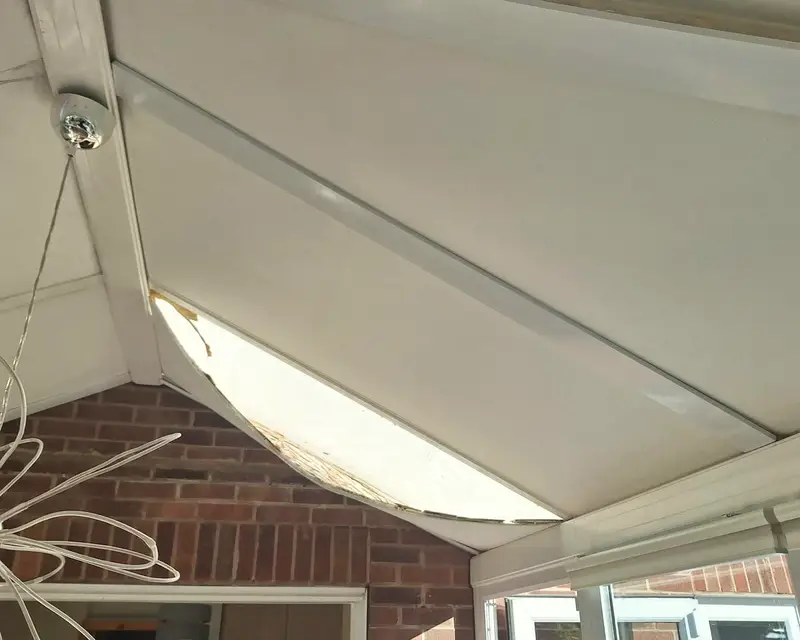
Why a cold ceiling collects water
Air carries water you cannot see, and the colder it gets, the less it can carry. Let room air brush against something chilly enough and it has to put some of that water down, as droplets. A can straight from the fridge sweats for the same reason. The temperature where it starts is called the dew point.
On a winter night the roof is the largest cold surface in the room. When the room sits at 20°C and the garden is at freezing, standard surface sums put the underside of a tired 25 mm polycarbonate sheet about 5°C below the room air, and an older glass unit colder still. Add a few people breathing, a kettle, wet coats or washing on a rail, and the dew point creeps up to meet it. Droplets gather, join, run down the bars and fall.
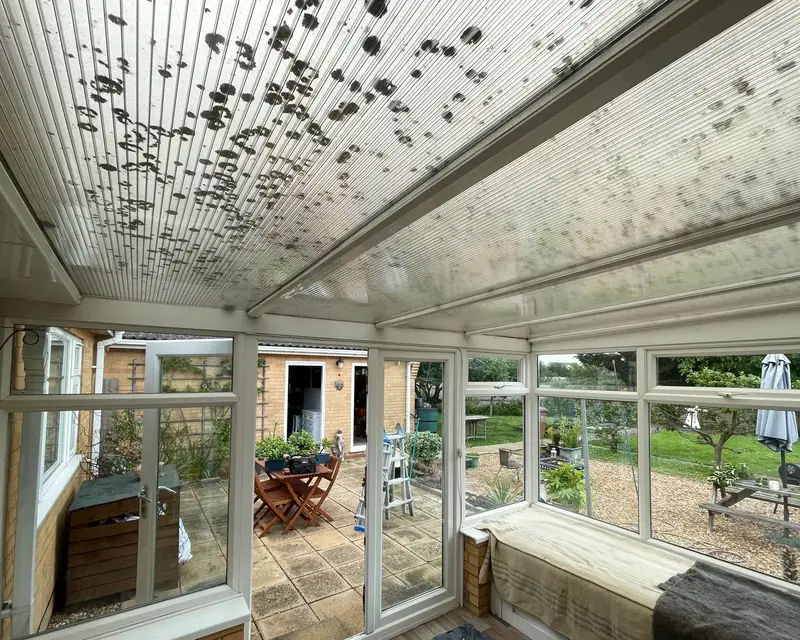
Condensation or leak: the signs
Most cases sort themselves out on this table. Weather is the strongest clue, so keep a note for a week of when you find water and what the sky was doing.
| Condensation | Leak | |
|---|---|---|
| When it happens | Cold mornings, often dry ones | During rain or within a few hours of it |
| Where it appears | Beads spread across the ceiling and glass | One spot, or a line along one bar or joint |
| What makes it worse | Drying laundry, cooking, a full room, a paraffin or gas heater | Wind driven rain from one direction, blocked gutters |
| What the water looks like | Clean, fine droplets, misting on the walls too | Drips that may carry dirt, stains spreading on the frame |
| Inside the sheets | Usually dry | Water lying in the flutes, green lines |
Three tests you can do this week
None of these needs tools beyond a hose and a dry tea towel.
Finding the source
- The dry tea towel testWipe the ceiling dry at bedtime. If it is wet again by morning with no rain overnight, it is condensation.
- The hose testOn a dry day, one person runs a gentle hose over one section of roof while another watches inside. Work from the bottom up, a few minutes per section.
- The wall junction checkLook where the roof meets the house. Cracked sealant, a lifted flashing or a stain on the inside wall points to rain coming in at the top.
- The gutter lookA full gutter overflows backwards under the roof edge and can drip inside like a leak.
Cheap fixes for each one
For condensation, the aim is less moisture and more airflow. Open trickle vents and leave them open. Crack a roof vent for half an hour in the morning even in winter. Do not dry washing in the room. Swap any gas or paraffin heater for an electric one, because burning fuel adds water to the air. A small dehumidifier is cheap to run and empties the air of a surprising amount of water on a cold night. Keeping the room at a low, steady background warmth also helps, since a ceiling that never gets very cold collects less.
For a leak, start with the gutters, then the sealant line and flashing at the house wall, then the caps on the bars. Fresh sealant on a sound roof is a small job. A split or failed sheet is not: it lets water into the flutes, and that water stays. See dirt sealed inside the sheets for what that looks like over time.
A damp smell often comes with either problem. Why a conservatory smells damp goes into that.
What the panel roof changes
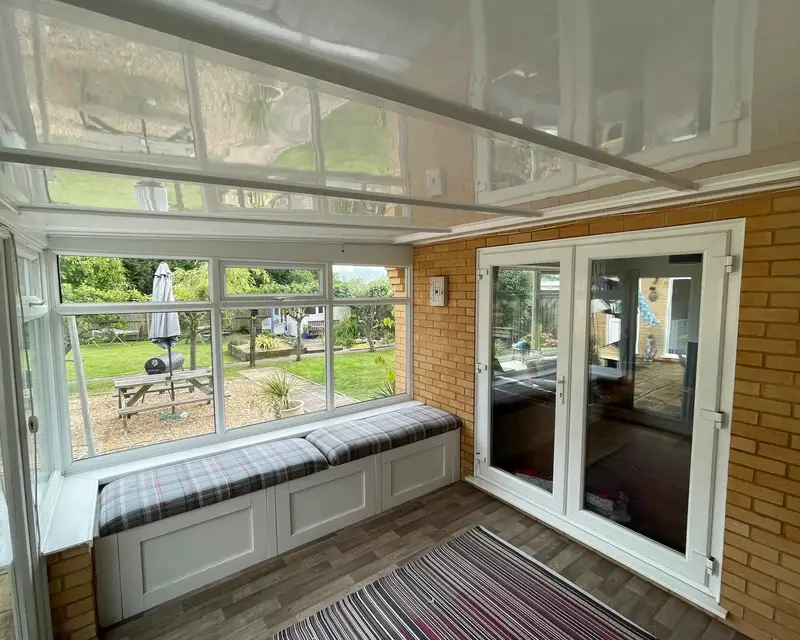
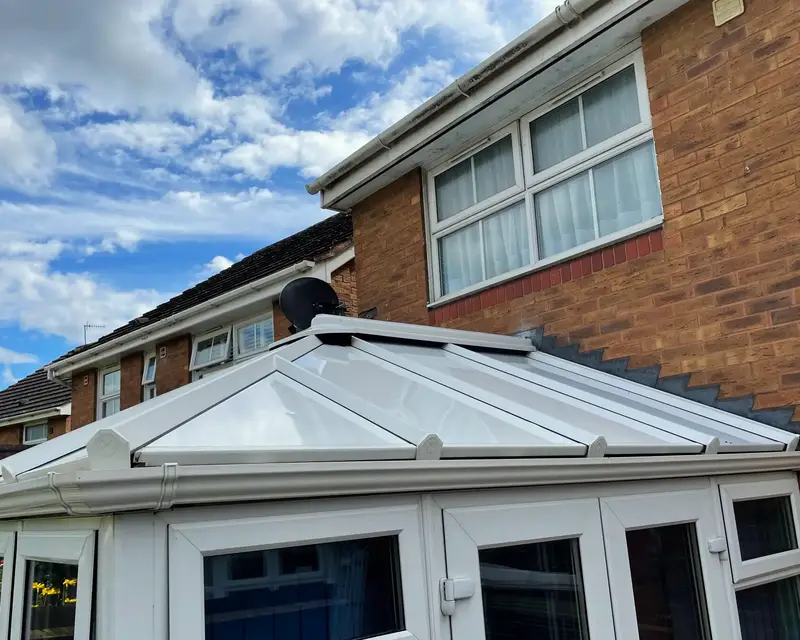
Each panel has 75 mm of insulating foam behind its ceiling skin, so the inside face stays warm. On that same freezing night, the sums put the panel ceiling about 1°C below the room air instead of about 5°C. That is usually well above the dew point, so the ceiling stays dry. Winter heat loss through the roof falls too, which our model counts in the heater you need: 1.7 kW under polycarbonate, 1.1 kW under panels, to hold 19°C at freezing.
For leaks, the whole roof is renewed: new panels, new seals at every joint, new trims and a fresh seal at the house wall. The guarantee on the roof runs for 10 years.
Limits, plainly. The glass walls are still cold surfaces, so a damp room can still mist its windows on frosty mornings. And a leak coming through the house wall above, or a failing gutter on the main roof, is not something a conservatory roof can stop. We look at both at the survey.
Before and after
Our guide prices start at £3,000, and the Comfort Calendar shows how cold your room runs in winter in your own town. To get a fixed written price, start a quote.