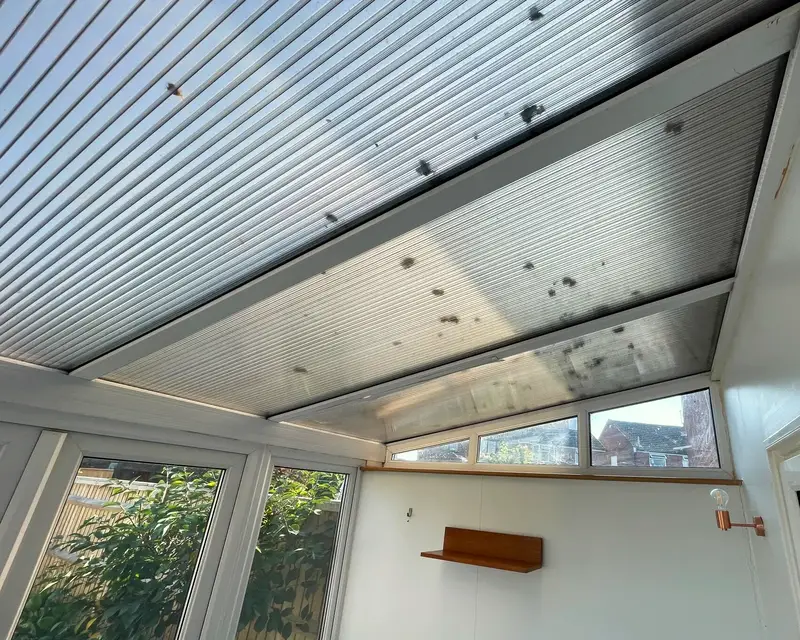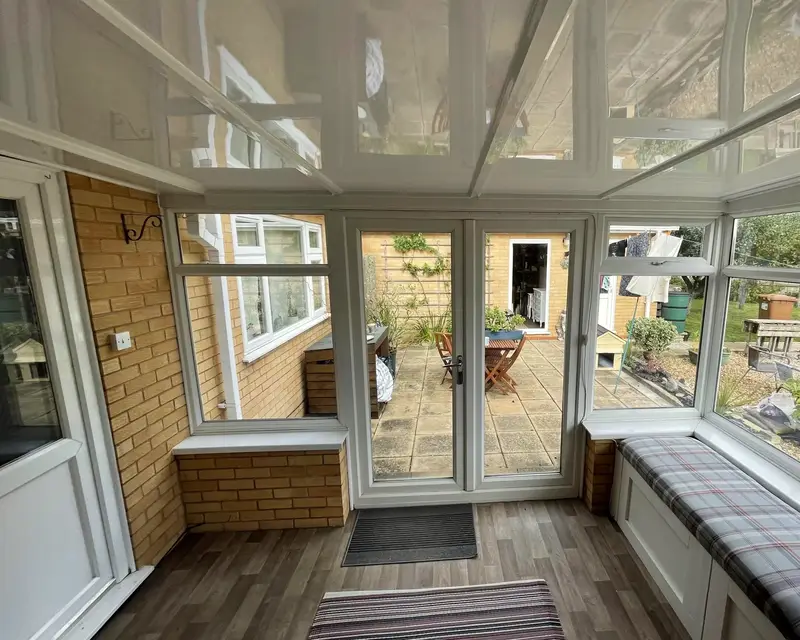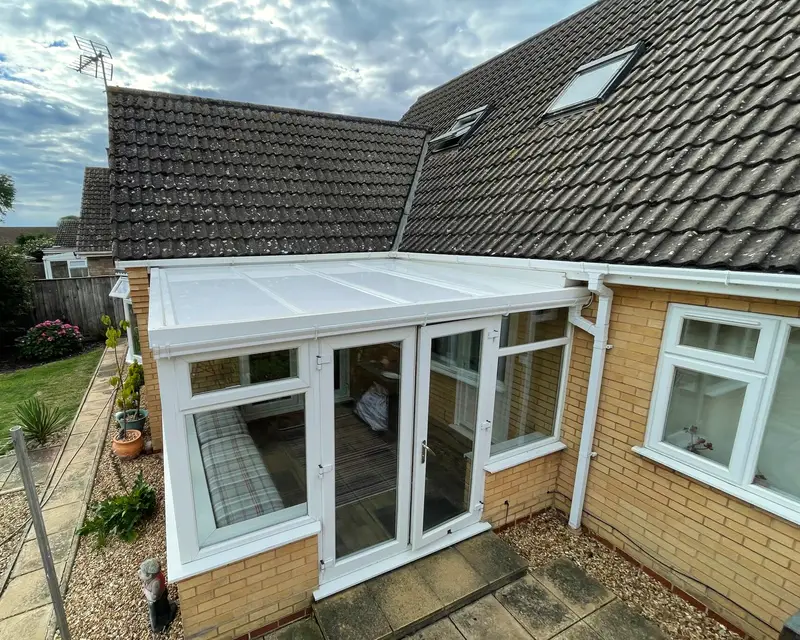
Where the warmth leaks out
Heat moves from warm to cold, and how fast depends on what is in the way. A brick wall with insulation slows it a lot. A tired 25 mm polycarbonate sheet slows it a little, with a U-value of around 2.4 in our model, against 0.43 for the panel roof. Lower means slower.
Then add the shape of the room. Your heater warms the air, the air rises, spreads along the underside of the roof, cools against it and drops back down the glass walls as a draught. That loop runs all evening. It is why your head feels fine and your ankles do not.
| U-value | What it means at 0°C outside | |
|---|---|---|
| 16 mm polycarbonate | 2.3 to 2.8 | Feels cold within minutes of the heater going off |
| 25 mm polycarbonate | 1.6 to 2.4 | Better when new, slips as the seals age |
| Older double glazed roof | about 2.8 | Cold to the touch, often wet on frosty mornings |
| Modern low-e roof glass | 1.2 to 1.6 | Noticeably warmer, still a large cold surface |
| Panel roof | 0.43 | Ceiling sits close to room temperature |
Find the cold spots yourself
On a cold, still evening, run your heater for an hour with the doors shut, then switch it off and watch a thermometer. A room that drops more than 5°C in the next hour is shedding heat fast, and the roof is the first suspect.
Next, the back of your hand. Hold it near the roof bars, the junction with the house wall, the door seals and the base of the glass. Draughts feel like a cold thread of air; cold surfaces feel like an open fridge. A candle flame or a stick of incense near the seals shows moving air you cannot feel.
For a full winter picture for your own town, the Comfort Calendar shows how many hours each roof spends below a comfortable temperature, month by month.
A cold room check in one evening
- Heat the room for an hourDoors shut, heater on, note the temperature it reaches.
- Switch off and time itRead the thermometer again after 60 minutes. A big drop means a leaky envelope.
- Feel the edgesBack of the hand along bars, wall junction, door seals and glass base.
- Watch a flameA flickering candle near a seal shows a draught worth fixing first.
Cheap things worth doing first
- Seal the draughts. Self adhesive strip on the doors and a bead of clear sealant where the frame meets the wall cost little and stop the loudest leaks.
- Cover the floor. A thick rug with a felt underlay keeps cold off your feet, which changes how warm the whole room feels.
- Curtain the glass at night. Lined curtains on the walls hold a pocket of calm air next to the panes once the sun has gone.
- Use a heater with a thermostat. An oil filled radiator set to the temperature you want wastes less than a fan heater on full, and short bursts while you are sitting there beat a heater left running from breakfast.
Panels clipped under the old roof are another route. We weigh them against a full change in an insulation kit versus a new roof. And for running costs by the hour, see hourly heating costs worked through.
Signs the roof has to go
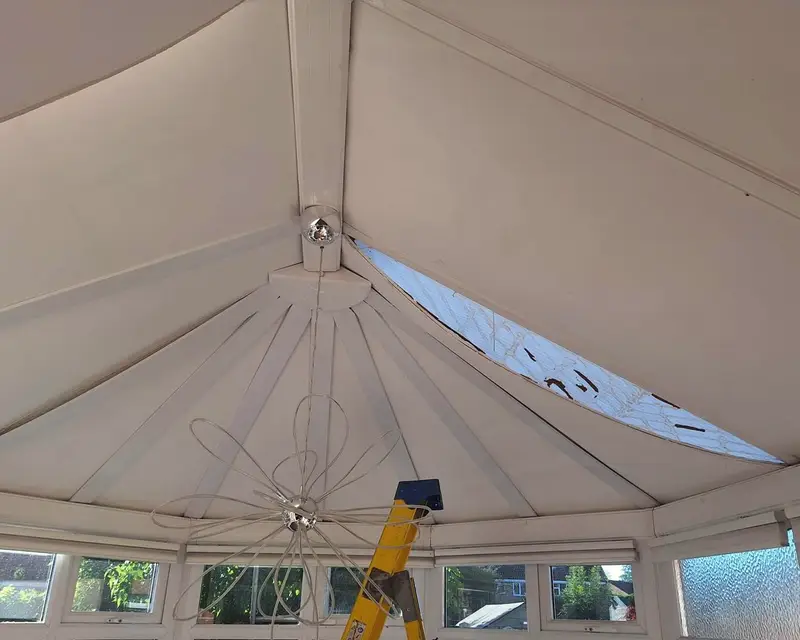
Draught strips and rugs are worth doing whatever roof you have. They stop working as a fix when the room still sheds heat fast with the seals sorted, when the heater runs flat out and the air under the roof stays cold, or when a sheet is split or fogged inside its flutes. A split sheet is a hole, whatever its label says.
Older glass roofs have a version of the same story. The sealed units mist up between the panes once the seal goes, and the cold surface overhead stays cold.
What a panel roof saves, in plain numbers
Swap the roof for 75 mm of insulated panel and the heater you need on a 0°C day falls from 1.7 kW to 1.1 kW, a 33% cut. Over a whole year of holding 19°C in waking hours, our model has the heating bill going from £433 to £368 on electric at 26.32p per kWh.
That is a 15% saving, about £65 a year, and we would rather you heard it plainly. The glass walls stay glass and keep losing heat, the floor stays as cold as it was built, and the room will not feel like the lounge. What changes most is the feel: no cold slab overhead, far less of the falling draught, and a room that holds its warmth for longer after the heater clicks off. If your floor is the worst part, read whether a new roof warms a cold floor.
Getting a price for your room
Prices depend on size and shape, from £3,000 for a small room fitted. Our guide prices page shows the bands, and the survey is free with nothing to pay before it.