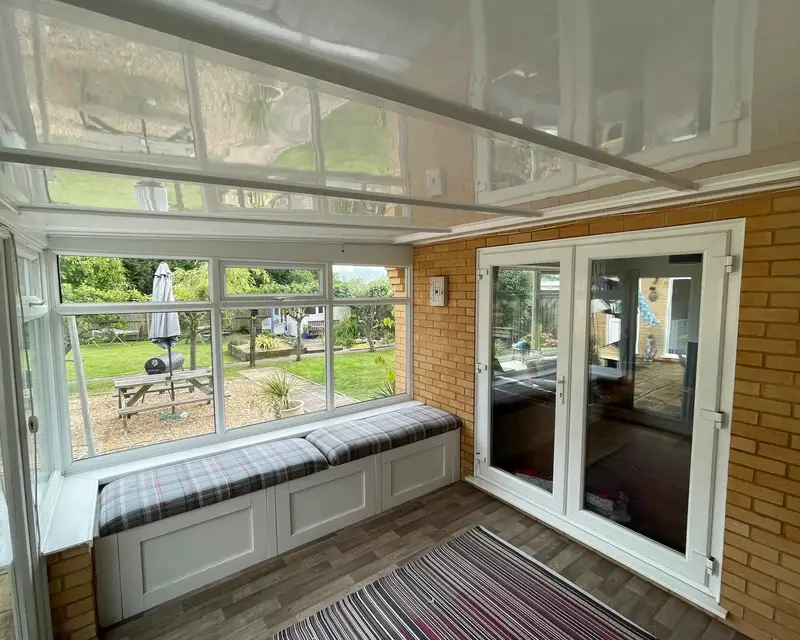
Why the floor is the coldest thing in the room
A typical conservatory from the 1990s or 2000s sits on a concrete slab poured straight onto hardcore, often with little or no insulation beneath it. The ground a short way down sits at roughly the same temperature all year, cool in summer and cool in winter, and the slab drags your floor towards it.
Hard finishes make it feel worse. Stone, ceramic and porcelain pull heat out of a bare foot quickly, so a floor at 14°C under stone feels much colder than carpet at the same temperature. The floor is not colder; it is just better at taking your warmth.
Then there is the air. Cold air is heavier than warm air, so whatever chill gets in, through gaps or off cold glass, slides down and pools at ankle height.
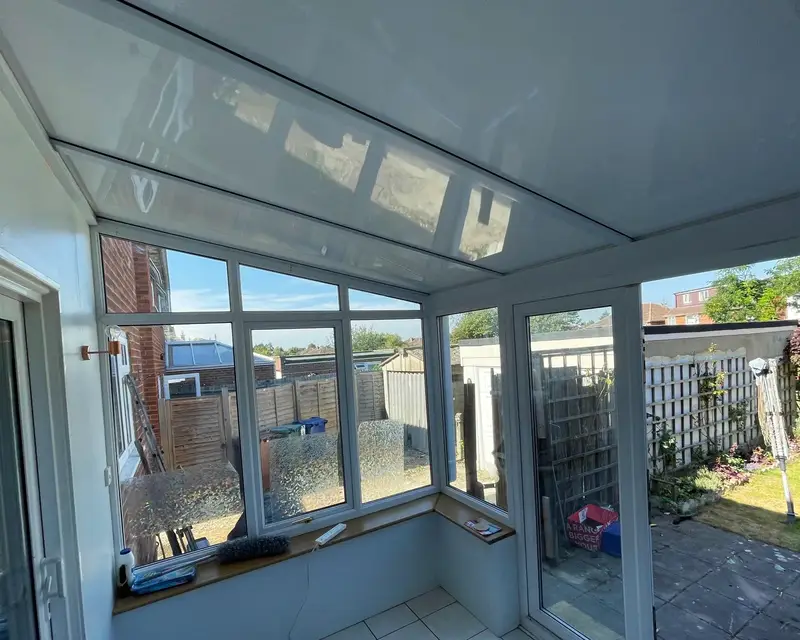
What the new roof changes, and what it leaves alone
The honest split looks like this. The roof is the biggest heat leak overhead, about 41% of the room's heat loss under polycarbonate in our model, so fixing it makes a real difference to the air. The slab is a separate problem.
A panel roof helps with
- Air temperature: the room holds heat far better
- Cold downdraughts falling off the old roof
- How fast the room warms when the heater goes on
- Condensation dripping onto the floor
A panel roof does not fix
- Heat soaking down into an uninsulated slab
- Draughts under the door and along the skirting
- The chilly feel of stone or ceramic underfoot
- Cold glass walls, which stay glass
Fixes for the floor itself, cheapest first
Start at the top of this list and stop when your feet are happy. Most people never need to go past the third step.
Warming up a cold floor
- Seal the gapsRun a strip of draught excluder along door sills and a bead of decorator's caulk where the skirting meets the floor. Cheapest fix, often the biggest.
- Lay a thick rugA wool or dense pile rug over the seating area stops the slab drawing heat from your feet. Use a rubber backed grip underneath.
- Put insulating underlay under laminate or carpetIf you are replacing the floor anyway, choose an underlay rated for warmth rather than just sound. It adds only a few millimetres.
- Insulate over the slabThin rigid insulation boards with a new floor on top make the biggest difference, but raise the floor level, so doors and thresholds need checking first.
- Add underfloor heating lastElectric mats under the floor work well only with insulation beneath them; without it, much of the heat goes down into the slab.
Finding where the chill is coming from
On a cold, still evening, run the back of your hand slowly along the bottom of the doors, the skirting and the line where the frame meets the dwarf wall. A draught feels like a thin cold thread. A strip of tissue held near each gap flutters if air is moving.
Then put your palm flat on the floor near the middle of the room and again by the outside wall. If the edge is much colder, the cold is getting in at the perimeter, which a draught fix or an edge strip of insulation can deal with. If the middle is just as cold, it is the slab, and the rug and insulation steps are your answer.
Doing both: roof and floor together
Plenty of people tackle the floor once the roof is in, because the room is finally worth furnishing properly. With the old roof gone, heat you put in stays in long enough for a rug or insulated floor to make a real difference, and over a year our model shows the room needing 15% less heating, about £65 a year at the 26.32p price cap. See our guide to a cold conservatory for the wider picture, and the best way to heat a conservatory if you are choosing a heater.
For how cold the room gets through a winter in your area, our Comfort Calendar shows each month hour by hour.
- 1.7 kW
- heater for 19°C at 0°C outside, polycarbonate roof
- 1.1 kW
- the same room under a panel roof
- 33%
- smaller heater needed