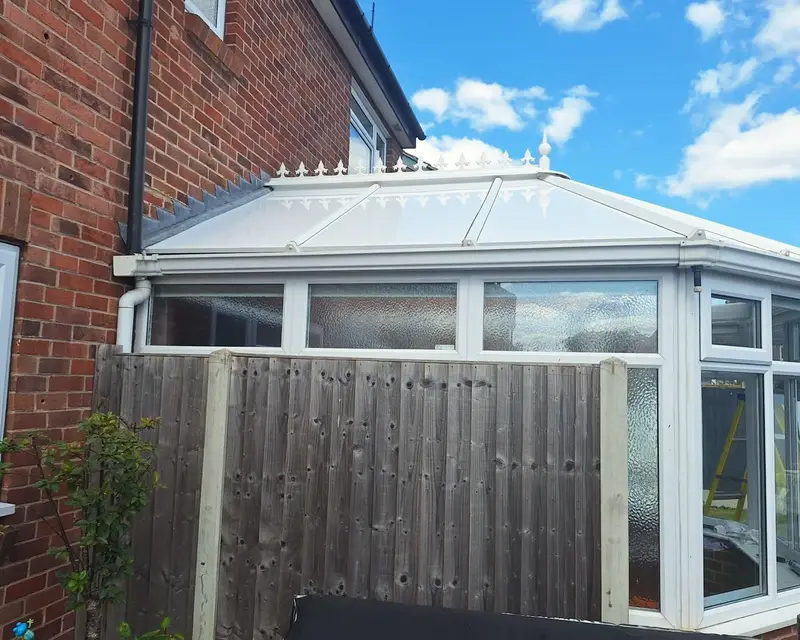
Why roofs get so grubby
A conservatory roof sits at a gentle angle, often under the drip line of the house roof or a tree. Rain should rinse it, but on a shallow slope the water moves slowly, and dust, pollen and bird mess settle faster than it washes them away. Damp plus dirt plus light is all algae needs.
Polycarbonate makes it worse in two ways. Ribbed and fluted sheets have grooves that hold muck where rain cannot reach. And as the sheet ages, its top face loses its smooth coating and turns slightly rough, so dirt grips harder every year.
Glass stays smoother for longer but shows every mark, and the edges where glass meets bar trap a line of grime that is hard to get at from the ground.
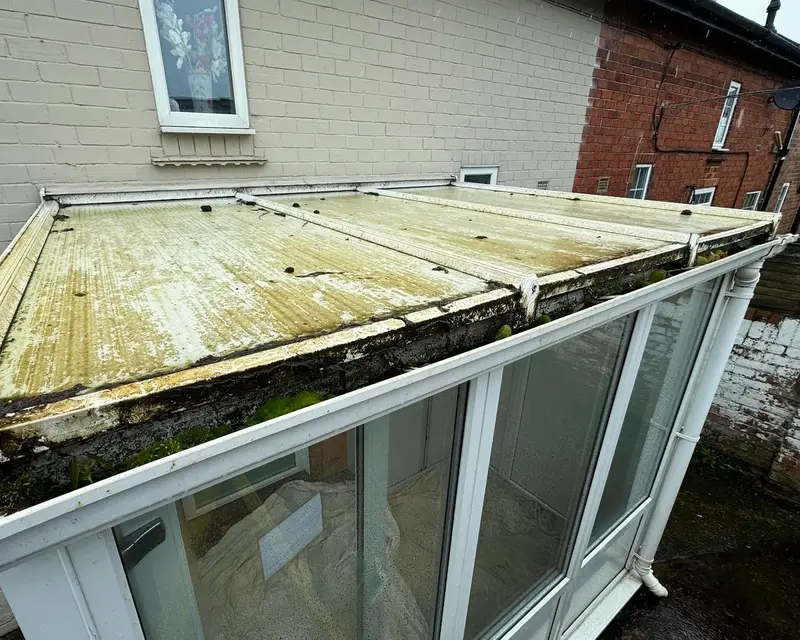
Outside or inside? A two minute test
Go inside on a bright day and look up. Dirt on the top surface looks like a film or spots on the outside face, and it blurs when you move your head. Dirt inside the sheet sits in neat lines that follow the flutes, often as green or brown stripes running down the slope, sometimes with water standing at the bottom end.
Then check the bottom edge of the sheets from outside. If the tape or cap that seals the flute ends is cracked, missing or black with mould, water has been getting in, and the dirt has followed it.
Dirt on top
- Patchy film, spots or moss clumps
- Wipes off a test patch from a ladder
- Moves when you move your head inside
- A spring wash is the fix
Dirt inside the sheet
- Stripes that follow the flutes
- Green or brown lines, standing water at the base
- Seal tape at the bottom edge has failed
- Cleaning cannot reach it
How to clean it without breaking anything
Never climb onto a conservatory roof. Neither polycarbonate nor the bars are built to carry a person, and a fall through a roof is a far worse problem than moss. Work from a ladder against the house or from the ground with an extending pole.
A safe spring clean
- Clear the gutter firstA blocked gutter keeps the bottom of the roof wet and grows the worst of the algae.
- Brush off loose debrisLeaves and moss clumps, with a soft brush on a pole, working down the slope.
- Wash with warm soapy waterA drop of washing up liquid in a bucket. No bleach, solvents or abrasive pads on polycarbonate.
- Rinse gentlyA hose on a soft spray. Skip the pressure washer: it can force water into the flutes and strip the surface.
- Wipe the inside on a dry dayA damp cloth on the underside, then a dry one, with the doors open.
When cleaning stops being worth it
If you are washing the roof every spring and it is green again by autumn, or the stripes are inside the sheets, the material has had its time. Sealing tape can be renewed on a sound roof, but once the flutes are full of growth they stay that way: the sheets are sealed tubes and there is no way to rinse them out.
Discolouring is a related sign. A sheet that has turned yellow or brown has aged right through, and that is covered on our page on yellowed polycarbonate. If you are not sure what your roof is made of, here is how to tell polycarbonate from glass.
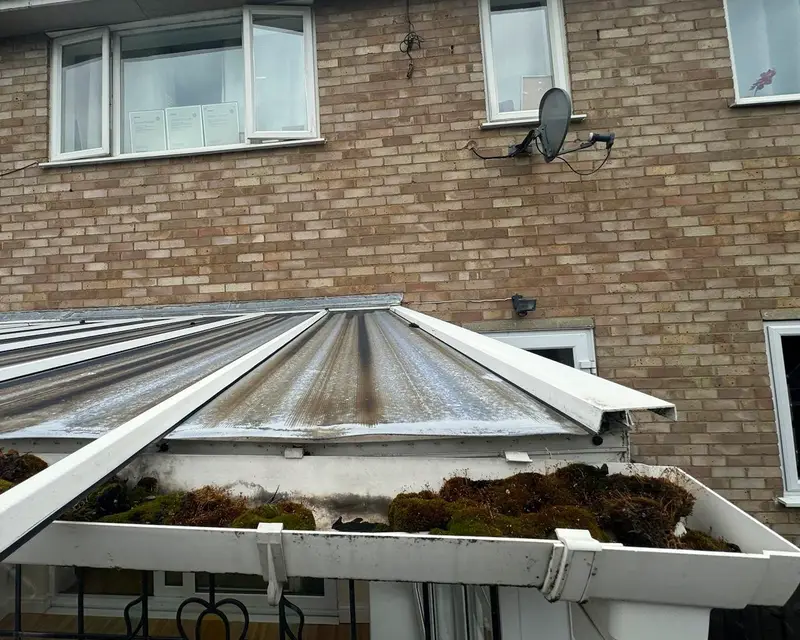
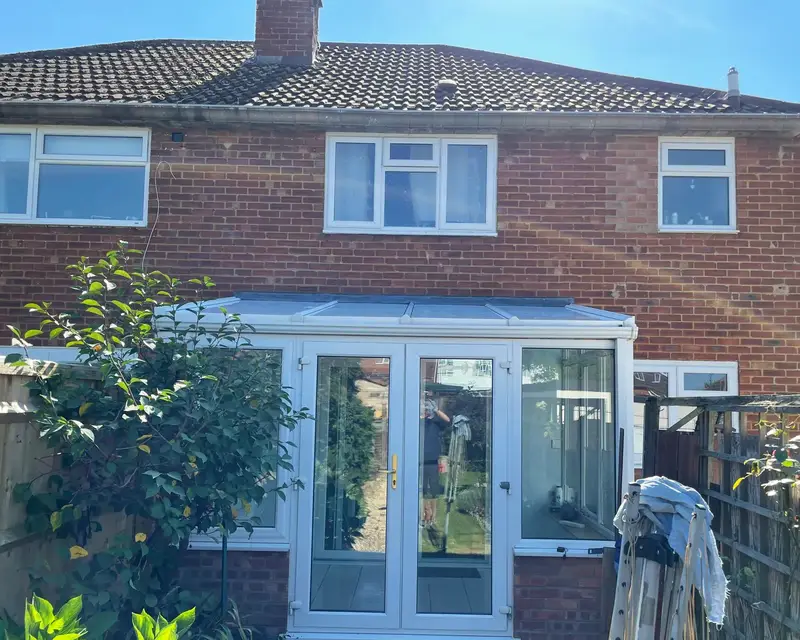
What a panel roof changes for cleaning
The top skin of each panel is smooth, coated aluminium with no flutes and no ribs. Rain runs off it more freely, there are no hollow chambers for water to get into, and dirt that does land rinses away with a hose. Inside, the ceiling is solid and white, so there is nothing to look up at except ceiling.
Panels still get dusty and still need the gutters clearing once or twice a year, particularly under trees. A gentle wash with a soft brush now and then keeps the finish looking right. The aftercare page covers what to do and what to avoid, and the guarantee on the new roof runs for 10 years, insurance backed.
The bigger reason most people change the roof is comfort, not cleaning. Our Comfort Calendar model puts a polycarbonate room above 25°C for 1,320 waking hours a year against 317 under panels.