Why polycarbonate turns yellow
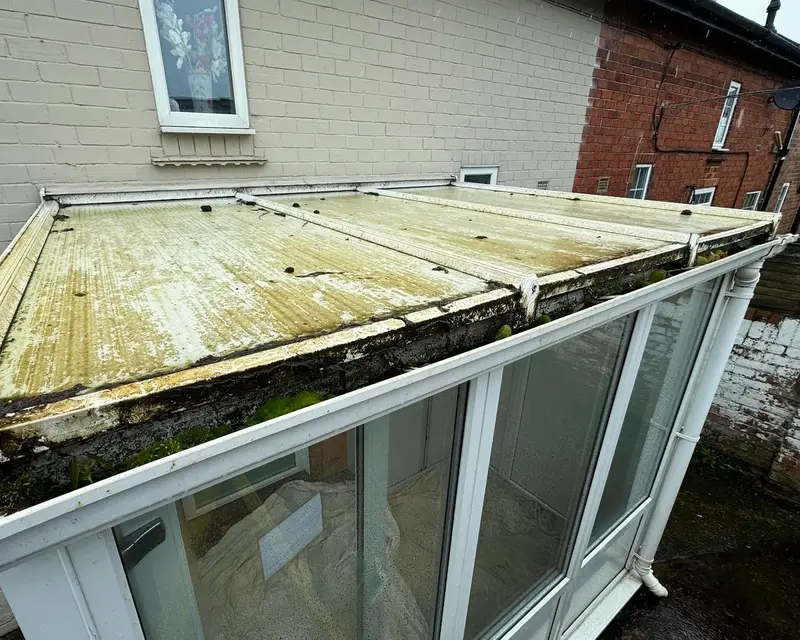
Ultraviolet light breaks down the long chains that make polycarbonate clear and tough. Sheets for roofs are made with a thin protective layer on the outer face that soaks up most of that UV. Over many summers the layer wears thin, and then the sun starts working on the plastic underneath. It yellows, then goes amber, and the surface turns slightly chalky.
Some roofs go faster than others. A south facing slope gets the most sun. A sheet fitted with its protected face pointing down, which does happen, ages in a fraction of the usual time. Harsh cleaners and some moss treatments strip the outer layer early too.
Yellowing comes with other changes you can feel. The sheet becomes more brittle, light through it turns warm and murky, and fixings can start to crack the sheet around their holes.
Yellowed, dirty or both?
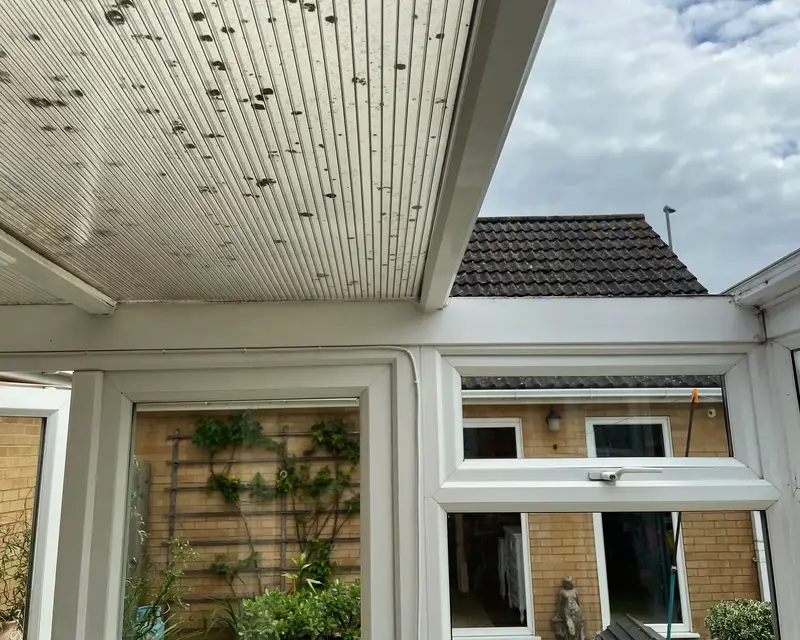
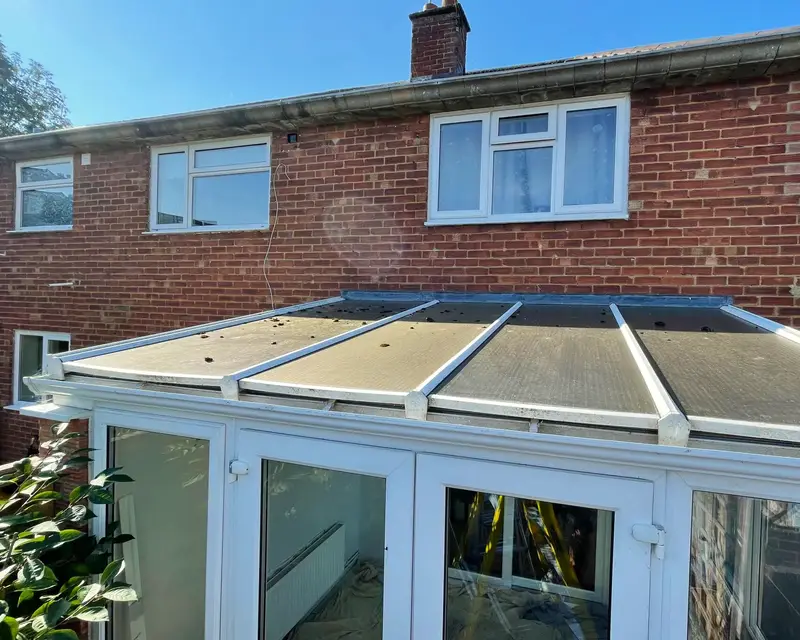
Most old roofs are both, which is why the clean patch test matters. Stay on a ladder; the roof will not hold you. Wash one sheet end with warm water and a little washing up liquid, rinse it, and let it dry.
| What it means | What to do | |
|---|---|---|
| Clean patch is clear | It was surface grime | Wash the rest; recheck the seals at the sheet ends |
| Clean patch is pale yellow | UV ageing has begun | Plan ahead; the sheet will get worse, not better |
| Clean patch is amber or brown | Aged right through | Time to replace the sheets or the roof |
| Stripes along the flutes | Dirt and water inside the sheet | Cleaning cannot reach it; the seals have failed |
| Cracks near fixings | The plastic has gone brittle | Do not lean ladders on it; replace soon |
Cheap things that help, and one that does not
- Wash it properly once. Even a yellowed roof lets more light through when it is clean, and you will know exactly what you are dealing with.
- Renew the end seals. If the sheets are still sound and only slightly tinted, fresh tape and caps at the bottom edge stop water and algae getting into the flutes.
- Paint is not a fix. Coatings sold to brighten old polycarbonate tend to streak and peel on a flexing sheet, and they do nothing for the brittleness underneath.
- Replacing like for like brings back clear sheets, and with them the same summer heat and winter chill as before.
For the comparison between new polycarbonate and panels, see insulated panels against new polycarbonate.
What yellowing does to the room
A yellow roof still lets heat through. It just lets less light through with it, so the room ends up hot and dim at the same time, with a slightly sickly cast on white walls and skin. Ageing sheets also lose their seals, which is when the drips start. If you have water coming in, read condensation or a leak first.
Not sure how long your roof has been up? How old is my conservatory roof walks through the clues in the paperwork, the sheets and the bars.
What the panel roof changes
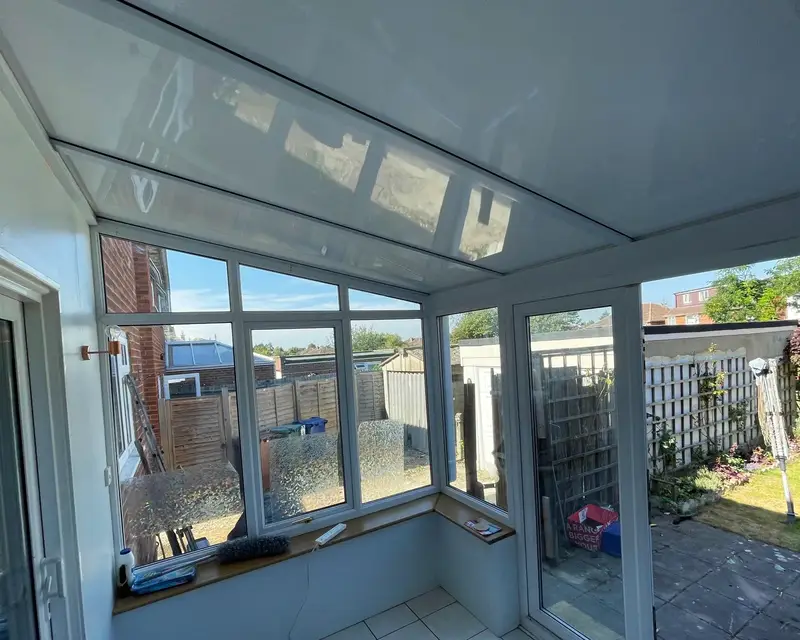
Panels do not yellow. The outer skin is coated aluminium in white, light grey, anthracite grey or one of a few other finishes, shown on our colours and finishes page, and the inner skin is a smooth white ceiling. There is no clear plastic left in the roof to age.
Comfort is the bigger change. Our model puts a polycarbonate room above 30°C for 556 waking hours a year, against 34 under panels, and the hottest hour falls from 47°C to 34°C. In winter the heater you need to hold 19°C at freezing drops from 1.7 kW to 1.1 kW.
The honest limits: the room loses its overhead daylight and becomes lit from the sides, the glass walls keep losing heat in winter, and the winter heating saving is real but modest at 15%. A roof light can bring back some sky if you want it.
Pricing the change
Our guide prices run from £3,000 for a small room fitted. The survey is free, the price you get afterwards is fixed and in writing, and the quote journey takes a couple of minutes.