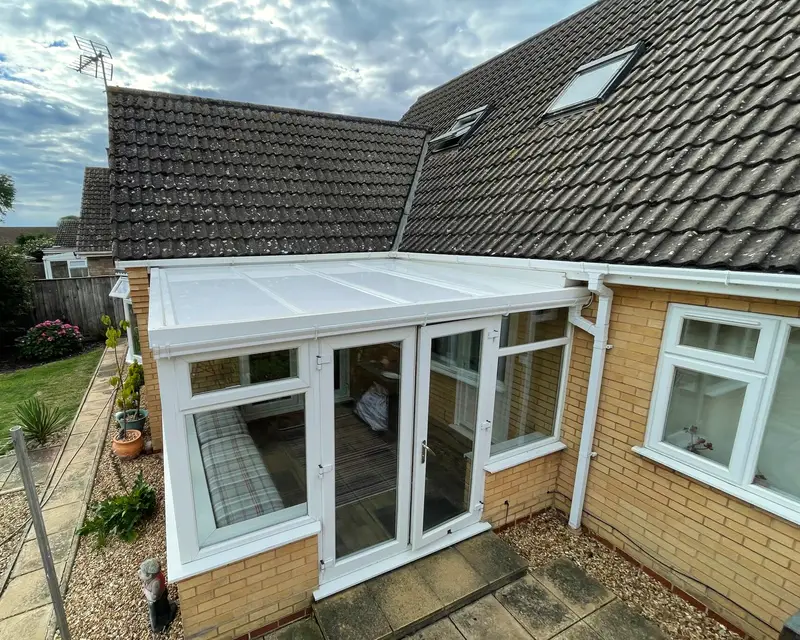
Where the light comes from once the roof is solid
Plants care about two things in a glazed room: how much light reaches the leaves and how hot the leaves get while it does. A clear or opal roof delivers plenty of the first and far too much of the second in summer. A 75 mm panel roof takes the overhead light away, but the side glass is untouched, so light now arrives low and sideways, the way it does through a window.
Think of a spider plant on a kitchen sill. It lives on one pane of side light and grows perfectly well. A conservatory with three glazed sides gives it light from several sides at once. The room reads as bright, just not as a greenhouse.
If you want some light from above, we can set a roof light among the panels above the spot where your plants live. We cover where they work on the colours and finishes page.
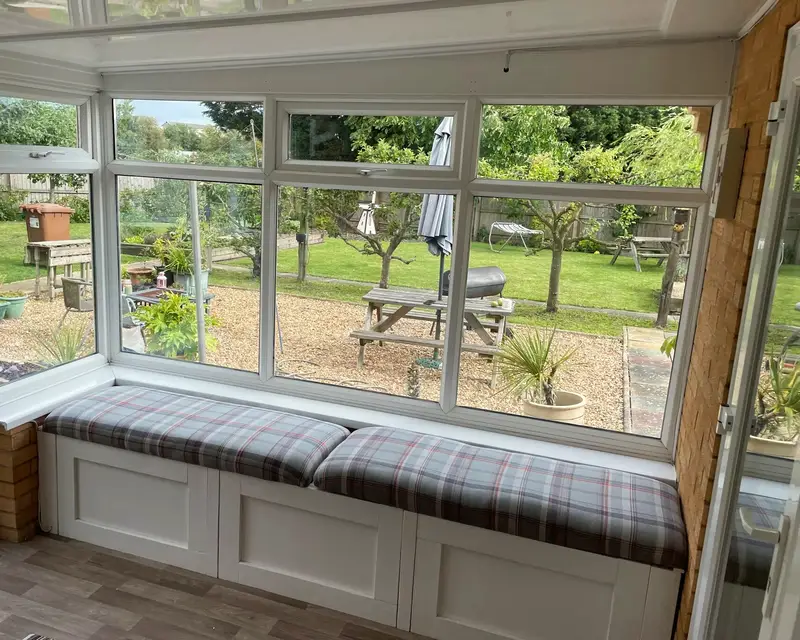
Which plants settle in, and which sulk
Sort your plants by what they evolved for. Forest floor and understorey plants are used to light filtered through leaves above them, and a panel roof gives them much the same. Desert and Mediterranean plants grew up with nothing above them but sky, and they notice the loss.
Settle in quickly
- Peace lily, pothos and philodendron
- Ferns, calathea and prayer plants
- Snake plant, ZZ plant and cast iron plant
- Orchids on a bright sill out of direct sun
- Monstera, rubber plant and fiddle leaf fig near the glass
Need the sunniest wall or a roof light
- Cacti and most succulents
- Tomatoes, chillies and peppers
- Citrus trees and olives
- Bougainvillea and other climbers that flower on hot sun
- Seed trays that need light from directly above
Why heat was the real plant killer
Most people who ask this question are worried about light, yet the plants they lost under the old roof usually died of heat. Leaves cool themselves by losing water. When the air around them sits in the high 30s or 40s, they lose water faster than the roots can lift it, the edges crisp and the compost turns to dust by teatime.
Our Comfort Calendar model puts a typical July afternoon at 3pm at 33°C under polycarbonate and 34°C under glass. Under the panel roof the same afternoon averages 25°C, which is about the top of what most houseplants enjoy. The reason is that the roof stops the sun landing on the floor and turning into heat, explained in our page on solar gain in a conservatory.
Rearranging the room for the new light
A few changes in the first fortnight make the move painless:
- Put the sun lovers right against the wall that faces closest to south. That glass still gets direct sun for hours on a clear day.
- Move shade plants back from the glass. Under the old roof they hid behind the sofa; now they can come forward into the middle of the room.
- Turn pots a quarter turn each week. Side light makes stems lean towards the glass.
- Water less. Compost that used to dry out in a day now stays damp for several, and overwatering becomes the main risk.
- Expect a little leaf drop in the first weeks as plants adjust to the change, then new growth to suit the light.
If you are not sure which wall gets the most sun, our page on which way a conservatory faces explains how to tell.
Winter is the season plants notice most
From November to February the sun sits low in the sky, so most of the winter light came through the walls anyway. The overhead sun you lose is weak at that time of year. What plants gain is warmth: a room that drops to near freezing on a still January night is hard on a lemon tree or a jade plant, and the panel roof cuts the heat leaving through the top of the room. If you heat the room a little, the 1.1 kW heater our model needs to hold 19°C at 0°C outside is smaller than the 1.7 kW needed under polycarbonate.