How much sun each direction catches
The Comfort Calendar lets you pick south, west, east or north facing and replays two years of hourly weather for your town. Behind that choice is one number: the share of sunlight the glass walls pick up compared with a room facing due south.
A west facing wall scores almost as high as south because it gets the sun in the late afternoon, which is also when the outside air is at its warmest. An east wall catches the morning sun while the air is still cool, so the room warms up and then eases off by lunch. A north wall only sees direct sun early and late on long summer days.
What each direction feels like through the day
The same 14 square metre room behaves like four different rooms depending on where it points. This is the pattern you will notice living in it:
| When the sun arrives | What it is like | |
|---|---|---|
| South | Late morning to mid afternoon | The hottest summer room and the brightest winter one |
| West | Afternoon and evening | Comfortable at breakfast, stifling at 5pm, slow to cool at night |
| East | Sunrise to late morning | Lovely for breakfast, coolest in the afternoon of the four |
| North | Early and late on summer days | Even light, little glare, coldest from October to March |
Why the roof beats the compass
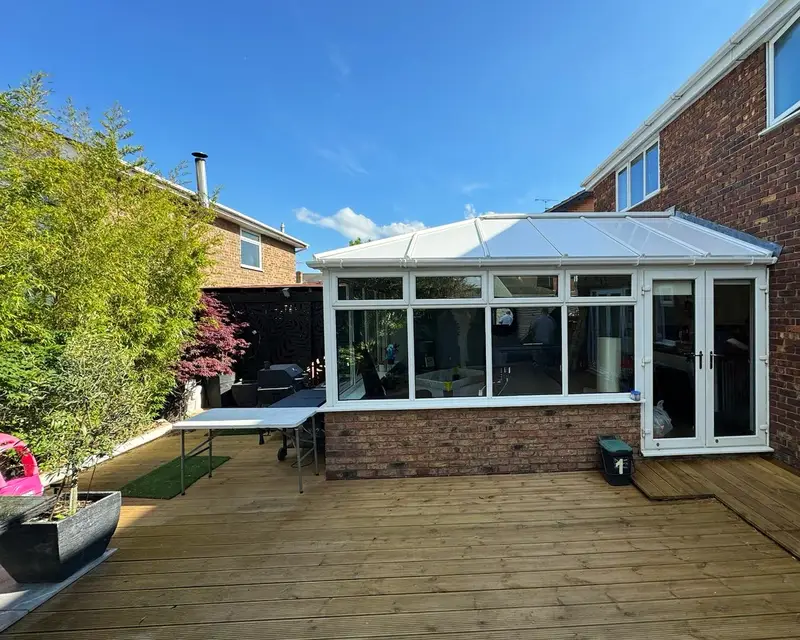
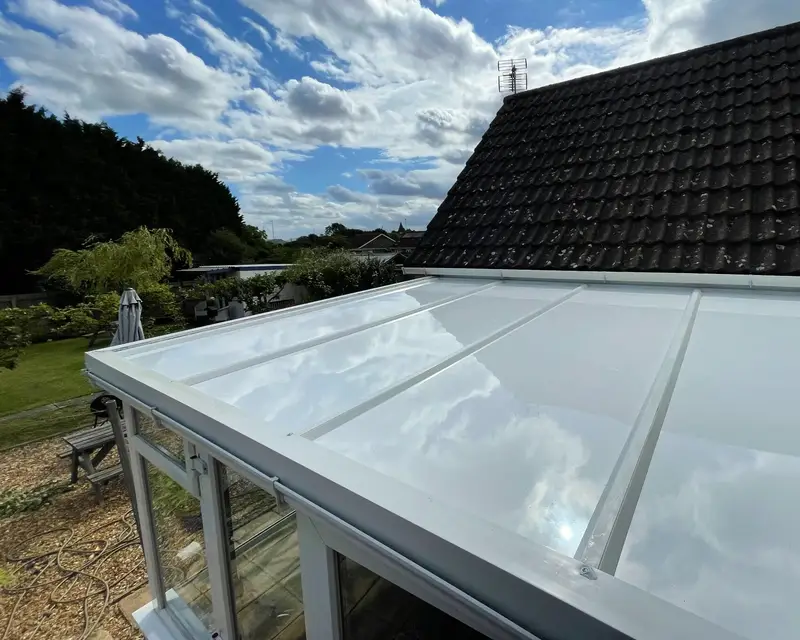
In summer the sun is high over the UK at midday, so a flat or gently sloping roof gets hit far harder than an upright wall. In our model, under a polycarbonate roof roughly three quarters of the sunshine that ends up as heat in the room enters through the roof. That part does not care which way the house faces.
So a north facing conservatory with a clear roof still overheats. It just overheats a little less than its south facing neighbour. The room our model uses faces south and averages 1,320 waking hours a year above 25°C under polycarbonate. Turn the same room north and the walls lose about 40% of their sun, but the roof keeps all of its share, so it still clocks up about 1,180 hours.
Fit a solid roof and the picture flips. The 75 mm panels let no sunlight through, so the walls become the only way in for solar heat. Now direction matters a lot: a north facing room under a panel roof passes 25°C for only about 135 waking hours a year, while a south facing one still warms up nicely on a bright spring day.
| Polycarbonate roof | Panel roof | |
|---|---|---|
| South facing | 1,320 | 317 |
| West facing | 1,294 | 275 |
| East facing | 1,270 | 241 |
| North facing | 1,184 | 135 |
Finding out which way yours faces
Stand in the conservatory with your back to the house wall and look straight out through the far glass. That is the direction it faces. A phone compass app does the rest. If the answer falls between two, say south west, treat it as the warmer of the two in the calendar.
Watch where the sun lands at three times of day: breakfast, lunch and early evening. A room that is sunlit at breakfast is east facing in practice, even if the compass says south east. Trees, fences and a neighbour's extension can also shade a wall for part of the day, which is why two rooms on the same street can feel quite different.
You cannot turn it round, but you can change the lid
Most people asking this already have a conservatory and cannot move it. With a room pointing south or west the honest advice is that blinds and fans treat the symptom, and the roof is where the heat gets in. Our overheating league table shows the hottest town in the model, Hounslow, at 1,501 too-warm hours a year under polycarbonate, against Buxton at 949. Both are south facing in the model, so your own aspect moves your number up or down from there.
For a north facing room the issue is usually winter cold rather than summer heat, and the roof is still the largest surface leaking warmth. See our page on heat loss through a conservatory roof for the figures.