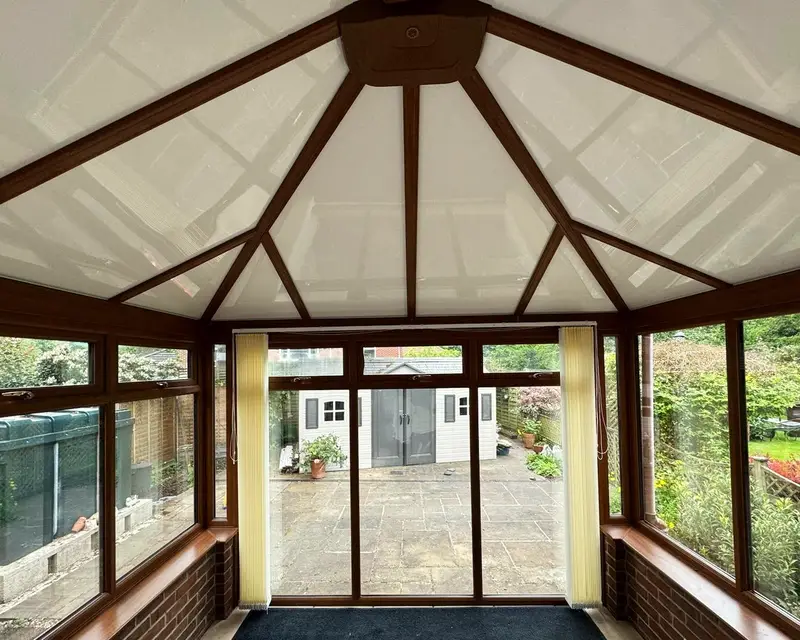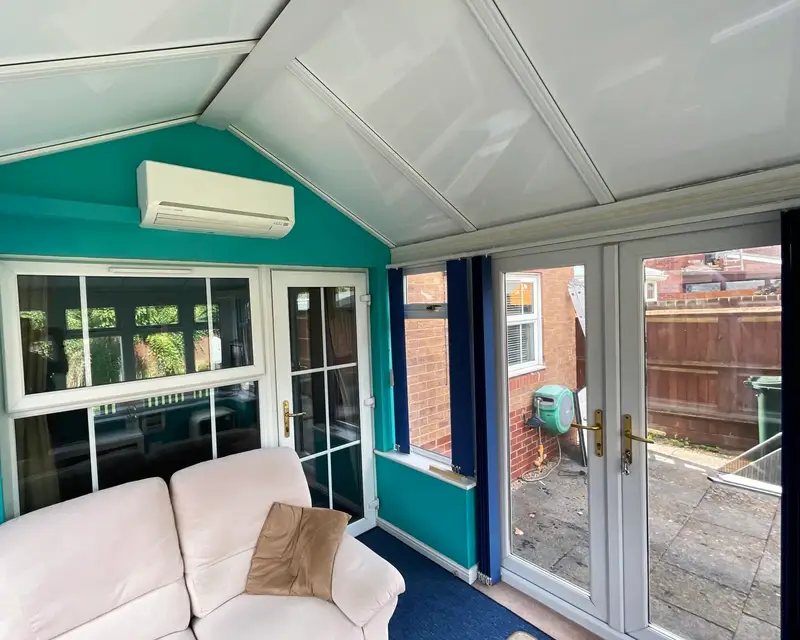
The peak, roof by roof
The figures come from one room, 14 m² floor (4.0 m by 3.5 m), three glazed sides, south facing, run through two years of real hourly weather for 104 English towns. It is left unheated, and once it passes 25°C we assume someone opens a door or vent. So this is a room that somebody is actively trying to cool, not a sealed greenhouse.
Even with the door open, the polycarbonate version spends 556 waking hours a year above 30°C. Glass manages 714. The panel roof, 34. Put in your own town and roof type in the Comfort Calendar and it draws the whole year as a grid of hours.
Why the roof does most of the damage
At midday in June the sun is high, so it hits a sloping roof almost square on and a vertical wall only at a glancing angle. The roof is also the biggest piece of clear surface the room has. Sunlight goes through it, lands on the floor and the sofa, and turns into warmth that cannot get back out through the same sheet.
Warm air then rises and pools at the top, right under the panes doing the heating. That is why the space near the ridge can feel several degrees worse than at floor level. There is more on the mechanics in why a conservatory runs hotter than the garden.
Where you live matters, though not as much as the roof
The overheating league table sorts all our towns by the waking hours a polycarbonate conservatory spends above 25°C. Hounslow comes top at 1,501 hours. Buxton comes bottom at 949.
The coolest town on the list still loses the equivalent of about two months of full waking days to heat. Moving north helps a bit. Changing what is overhead helps far more: across all towns, the panel roof cuts the too-warm hours by 76%.
- 1,501
- too-warm hours a year in Hounslow, polycarbonate roof
- 949
- too-warm hours in Buxton, the coolest town we model
- 76%
- fewer too-warm hours under a panel roof
Facing north does not save you
Which way the walls face changes the morning or evening pattern. An east facing room peaks before lunch, a west facing one in late afternoon, just as you want to sit in it. But a shallow roof looks at the whole sky, whatever the compass says, and on a bright day it collects sun from overhead even on the shady side of the house. Our guide to conservatory orientation covers the details.
What actually brings the temperature down
Some fixes help a lot, some barely register. Roughly in order of effect:
Cooling a hot conservatory, weakest to strongest
- Ceiling fanMoves the air so your skin feels cooler. The thermometer does not move.
- Inside blindsThey catch the sun after it is already in the room, so the heat stays with you.
- Vents high and lowCool air in at the bottom, hot air out at the top. Worth a few degrees on a breezy day.
- Reflective film or outside shadingStops some sun before it gets through. Better than blinds, but it darkens the room and wears.
- An insulated roofTakes the biggest source of heat away. Our model puts the hottest hour at 34°C.
What the panel roof does not do
The glass walls stay glass, so low evening sun still comes in sideways and a west facing room can feel warm after 6pm. A panel roof also does not cool the room below the outside air: on a 32°C day it will still be warm in there. What changes is that the room stops running 15 degrees ahead of the garden. If that sounds like your problem, the too-hot conservatory fix page lays out every option, and the prices page shows what a roof swap costs.