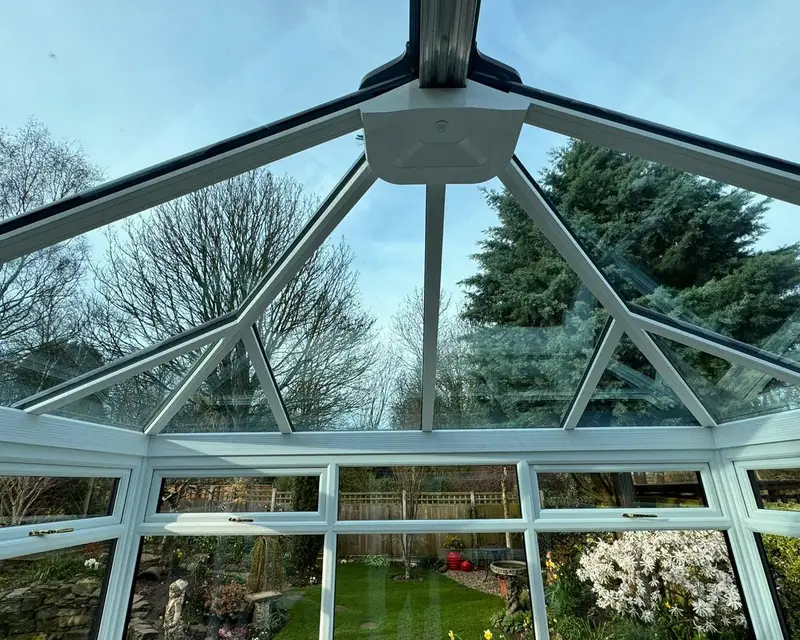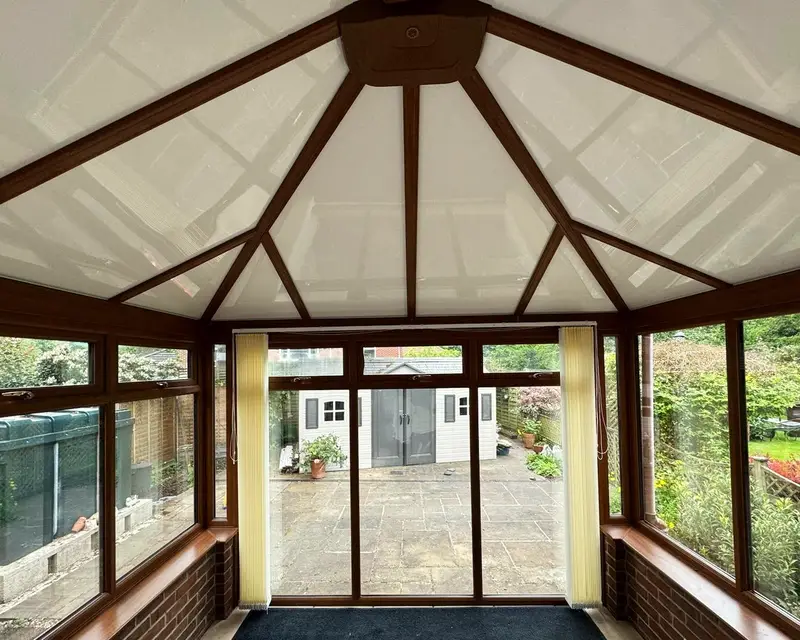
Light in, heat stuck
Glass and polycarbonate are see-through to sunlight but much less so to the warmth that a hot floor gives off. So energy comes in as light and cannot leave the same way. On top of that, the room is sealed from the breeze that keeps the garden air moving. Two effects, one result: the room charges up through the middle of the day.
How a sunny hour turns into a hot room
- Sun hits the roofA polycarbonate roof lets about half of the sun energy through, a glass one closer to two thirds.
- The floor soaks it upPatches of light become warm flooring, rugs and sofa cushions.
- Warm surfaces heat the airThe air rises and collects under the roof, the hottest part of the room.
- Heat leaks out slowlyThrough the sheets, the frame and any open vent, but slower than the sun keeps adding it.
The roof does the heavy lifting
Our model room has a 14 m² floor and about 15 m² of roof. A high summer sun strikes that roof nearly face on, while the glass walls catch it at a slant and reflect a share away. The roof ends up delivering most of the heat even though the walls have more glass in total.
That is also why a north facing conservatory can still overheat. The roof faces the sky, not the compass.
How much hotter, in numbers
These are 3pm averages for July across 104 towns, from two years of hourly weather. Pick your own town in the Comfort Calendar to see the hour by hour version for every month.
Why it stays hot after the sun moves round
The concrete floor and the furniture act like a storage heater. They take in warmth all afternoon and give it back for hours after the sun has gone off the roof. So at 9pm on a July evening, when the garden is pleasant, the conservatory can still be in the mid twenties with the doors open.
Why opening the door is not enough
Our model already assumes a door or vent opens the moment the room passes 25°C, and the hottest hour of the year still averages 47°C under polycarbonate. One open door swaps air slowly, mostly at floor level. The hot layer sits at the top, where there is usually nowhere for it to go. A roof vent helps more than a door, and a high vent plus a low one helps most, but none of them stops the sun coming in.
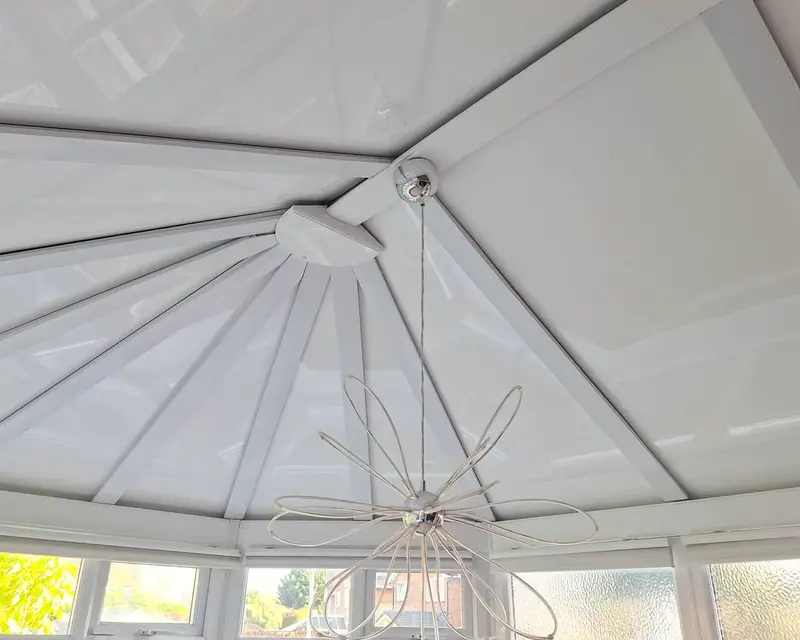
Stopping it at the source
An insulated panel roof lets no direct sun through at all. The aluminium top skin gets warm, but 75 mm of foam stands between it and the room. With the roof no longer acting as a solar collector, the July afternoon drops to 25°C in our model and too-warm hours fall by 76%. The glass walls still let some side light and heat in, so it will not feel like a north facing bedroom. There is a fuller test of that in does an insulated roof keep a conservatory cool.