Why the picture washes out
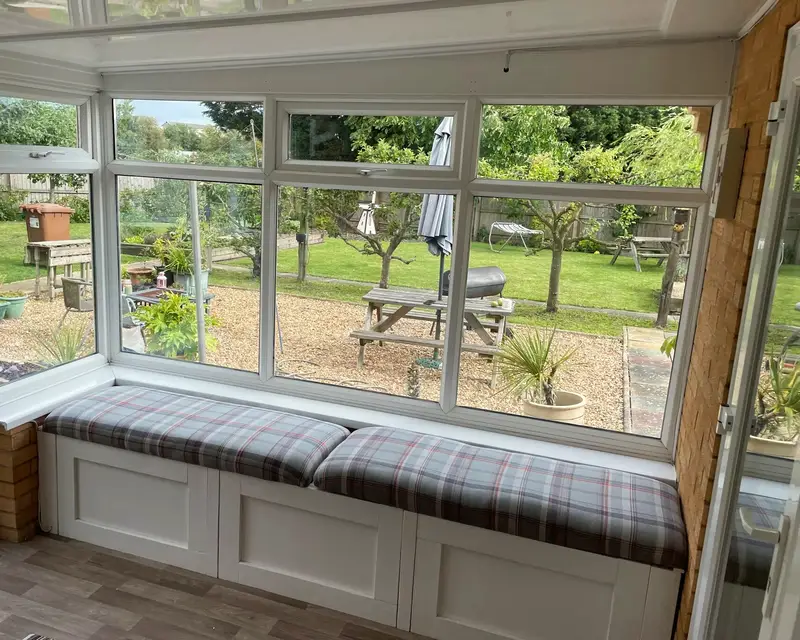
A screen can only make its own light so bright. The light around it has no such limit. Indoors at night a lounge sits at a few hundred lux. Under a polycarbonate or glass roof on a sunny day, the room can be well into the tens of thousands, close to standing in the garden.
Two things go wrong. Light falling on the screen reflects back at you, so you see the roof and the windows instead of the picture. And your eyes adjust to the bright room, so even a clean image looks dim and grey.
| Where | Rough light level |
|---|---|
| Lounge with the lamps on | about 100 to 300 lux |
| Bright cloudy day outdoors | about 10,000 lux |
| Under a clear roof, sunny afternoon | tens of thousands of lux |
| Full summer sun outdoors | up to about 100,000 lux |
Where to put the television
In most conservatories the house wall is the only solid one, so that is where the screen ends up, facing the glass. That keeps the bright garden from glowing behind the picture, but the screen now faces the glass and mirrors it, so reflections are what you have to manage.
- Tilt it down a few degrees. On a wall bracket, a slight downward tilt stops the screen reflecting the bright roof straight at your eyes.
- Shade the glass opposite. The wall behind your sofa is what the screen mirrors. One blind there does more than blinds everywhere else.
- Keep sun off the set itself. Direct sun on a screen heats the panel and can leave marks over time.
- Go darker behind the sofa. A white throw or pale cushions opposite the screen show up in it as a bright patch. Darker fabrics vanish.
Which screens cope best
Look for a high peak brightness figure (manufacturers list it in nits; the brighter the better here) and an anti-glare or matte finish rather than a mirror gloss. Projectors are a poor choice in a glazed room unless you only watch after dark. A small screen viewed from close up suffers less than a big one across the room, because it fills more of your view.
Heat, rain and the other problems
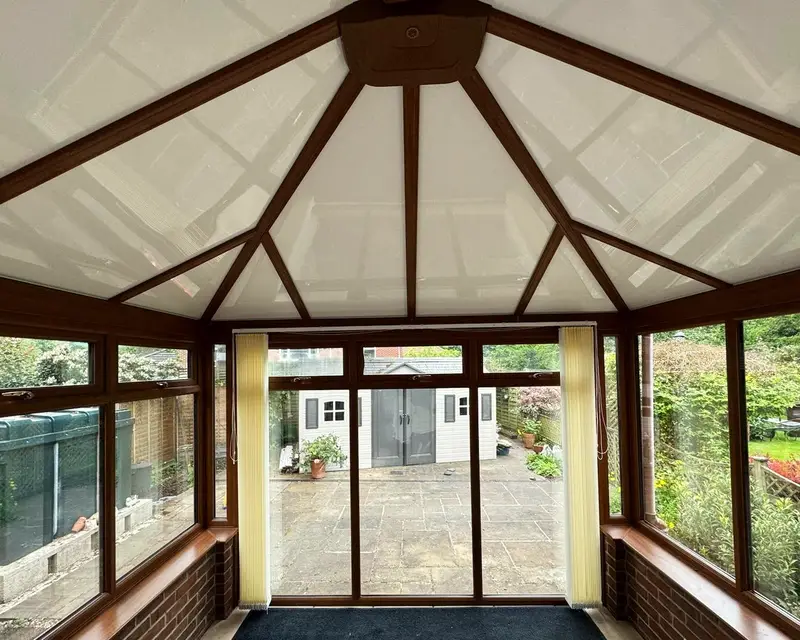
Under polycarbonate, our model room passes 30°C for 556 waking hours in a year, and under glass for 714. Electronics run warmer than the air around them, so a set boxed into a cabinet in that room is working hard. Under a panel roof the count drops to 34. The Comfort Calendar runs the same sums for where you live.
Sound is the other one. Heavy rain on a polycarbonate roof can drown out dialogue, which is how a lot of subtitles get switched on. The rain noise page explains why it is so loud.
Blinds, film or a solid roof
Roof blinds cut the light but leave bright strips at every bar, and the screen picks those out. Window film darkens the room but reflects patterns of its own. A solid roof takes the overhead light away entirely while the walls still give you the garden. Our conservatory glare fixes compare the options, and roof prices start at £3,000 for a small lean-to.