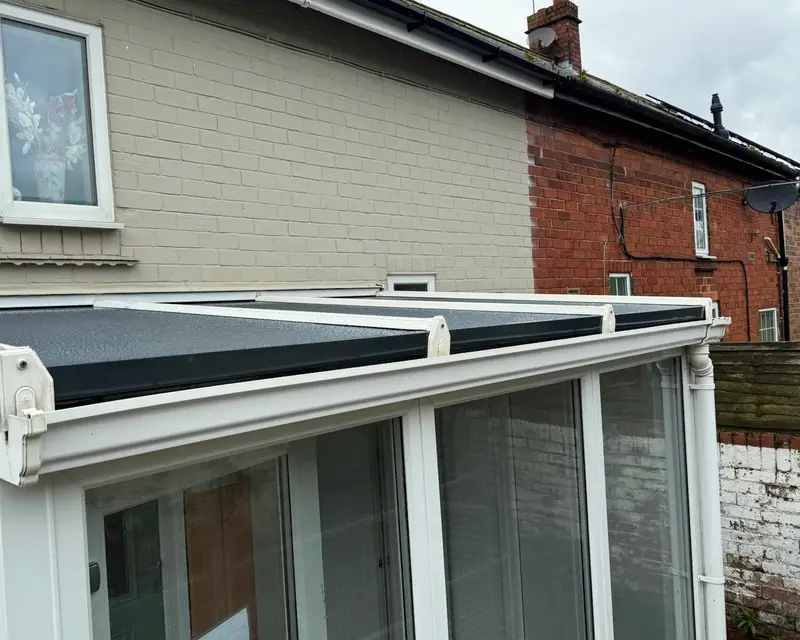
What modern roof glass can do
A current glass roof unit is two or three panes with a gas fill and thin metal oxide coatings. One coating keeps room heat in, another bounces back a share of the incoming sunshine. Tinted versions in blue, grey or bronze turn back more still. Many come with a self-cleaning outer layer that loosens grime under daylight so the next shower can carry it away, which works best on steeper pitches.
The result is a roof that is noticeably cooler than old clear glass and far warmer in winter. It keeps the view of clouds and stars, which is the reason most people built a conservatory in the first place. We think that is worth saying plainly before anyone compares prices.
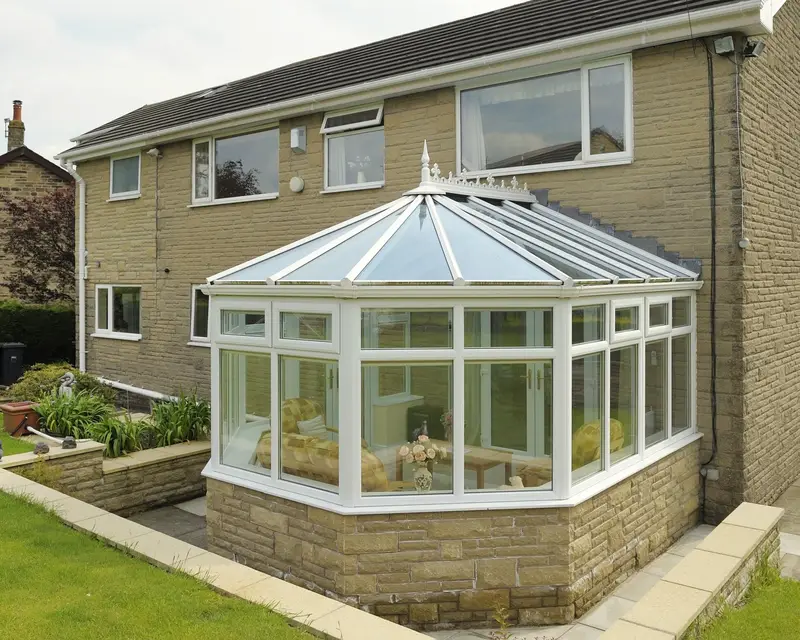
Where clear glass still struggles
Even the best solar control coating lets a share of the sun's energy through, because it also has to let light through. On a bright afternoon that share lands on the floor and the furniture and warms them. The glass walls already let in plenty; a glass roof adds the strongest sun of the day from directly above.
Our Comfort Calendar model has figures for the kind of double glazed roof fitted in the 1990s and 2000s, at about 2.8 W/m²K. That older glass gives 1,467 waking hours a year above 25°C, against 317 under panels. A new solar control roof would land somewhere between the two, usually much closer to the old glass than to the solid roof, since it still admits sun. See the overheating league table of 104 towns for how location changes it.
Winter warmth compared
Think of a U-value as a leak rate: watts lost per square metre, per degree the outside is colder than the room. Smaller numbers keep more warmth. New glass at about 1.4 loses roughly three times as much as a panel roof at 0.43. On a 15 m² roof with 19°C inside and freezing outside, that is about 400 watts through the glass against about 125 watts through the panels.
That gap is real, but the walls are the same either way, so it shrinks once you count the whole room. Our model puts the heater needed on a 0°C morning at 1.8 kW under the older glass and 1.1 kW under panels. A brand new glass roof would sit roughly halfway between the two. If your room feels cold right now, what to do about a cold conservatory explains the other leaks too.
Glass roof and panel roof side by side
Glass prices vary widely with the coating chosen. For panels, our conservatory roof price guide shows the starting figures for each size and shape.
| New solar control glass | Insulated panel roof | |
|---|---|---|
| Cost | Usually similar to panels or higher, more for tints and self-cleaning | From £3,000 for a small room |
| Winter warmth | U about 1.2 to 1.6 | U about 0.43 |
| Summer heat | Better than old glass, still sunny and warm overhead | 317 too-warm waking hours a year in our model |
| Daylight | Full sky view | Light from the walls, plus any roof lights |
| Rain noise | Quieter than plastic, a crisp tap | Muffled by 75 mm of foam |
| Lifespan | Sealed units often last 20 to 25 years before misting | Aluminium skins, 10 year guarantee |
| Upkeep | Needs washing, especially on low pitches | Occasional rinse, gutters cleared |
Glare, privacy and what you see from the sofa
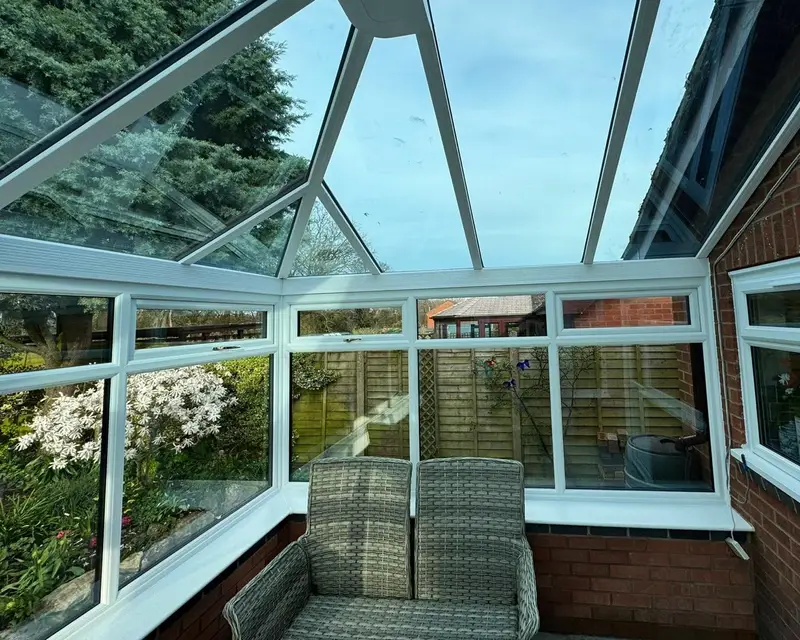
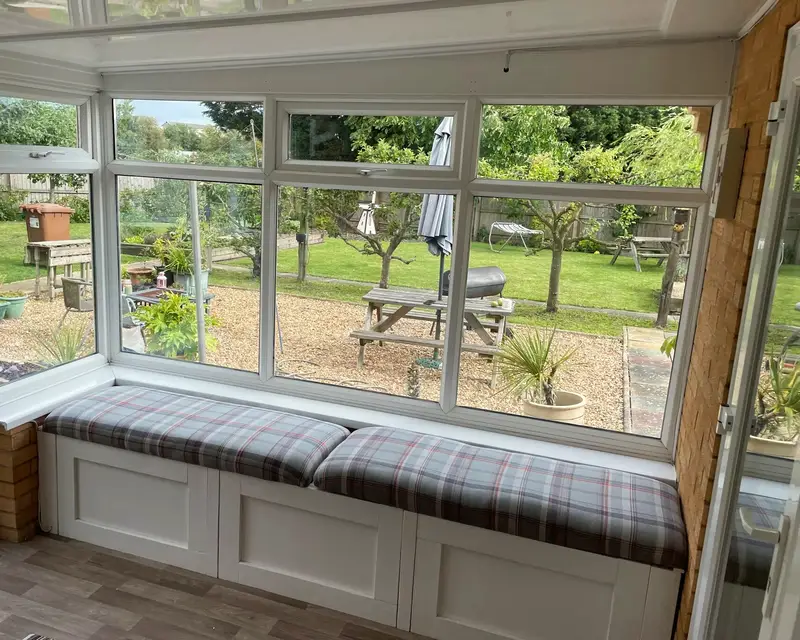
Glass overhead means the sun can find your screen at almost any hour. Tinted units soften that, but a laptop by a south facing glass roof still fights a bright patch. Under panels, light arrives from the sides at eye level, the way it does in an ordinary room, so a television can live anywhere.
There is also the view upwards. Some people love lying on the sofa watching rain run across the glass. Others notice neighbours' bedroom windows looking down. Only you know which camp you are in.
Our verdict, room by room
If you are torn, a halfway house exists: a panel roof with one or two glazed roof lights keeps a slice of sky while cutting most of the summer heat. When you are ready to see figures for your own room, book a free survey.
New solar control glass suits
- North or east facing rooms that rarely bake
- Garden rooms where the sky view is the point
- Owners happy to wash the roof or pay someone to
- Rooms shaded by tall trees or a neighbouring house
An insulated panel roof suits
- South and west facing rooms that hit 40°C
- Home offices and TV rooms troubled by glare
- Rooms where rain noise drowns out talk
- Anyone who wants the coolest roof per pound