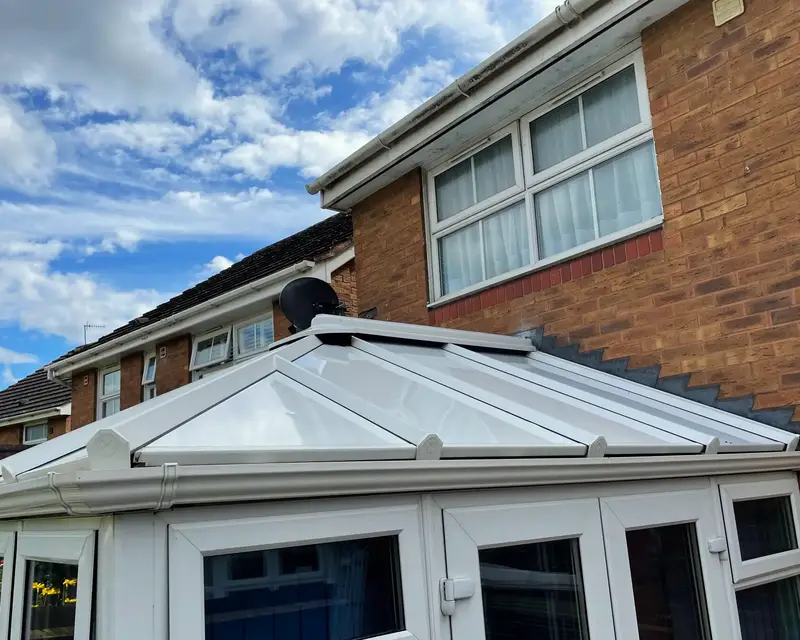
Before the first night
A spare bed in a glass room works for the odd guest. For regular sleeping, run through these first.
Bedroom checklist for a conservatory
- Blackout on every sideBlinds or lined curtains on all the glass, not just the side facing the neighbours.
- A steady heat sourceSomething with a thermostat, sized so the room holds 17°C on a frosty night.
- Fresh air without a draughtA trickle vent, a window on a night latch or a quiet extractor. A sleeping person breathes out a lot of moisture.
- A smoke alarmLinked to the house alarms if you can, and tested monthly.
- A clear way outA door or opening window you can use at night without hunting for a key.
The summer night problem
Conservatories cool down slowly. The floor slab, the sofa and the bed itself store the afternoon sun and release it all evening. Under polycarbonate our model room spends 1,320 waking hours a year above 25°C, and much of that warmth is still there when you get into bed.
An insulated roof changes the starting point. The same room averages 25°C on a July afternoon instead of 33°C, so there is far less heat stored by bedtime. Open a vent at dusk and it falls into the comfortable range much sooner. The Comfort Calendar shows how late into the evening your town stays warm.
Winter nights and wet glass
In winter the issue flips. A sleeping person breathes out roughly a glass of water overnight, and in a small glazed room it ends up on the coldest surfaces. Under a polycarbonate roof that is the roof itself, so you can wake to drips. Keep a trickle of fresh air going, run the heater on a low setting rather than letting the room drop and then blasting it, and a small dehumidifier earns its place. The dripping ceiling page explains what is happening up there.
Light and noise
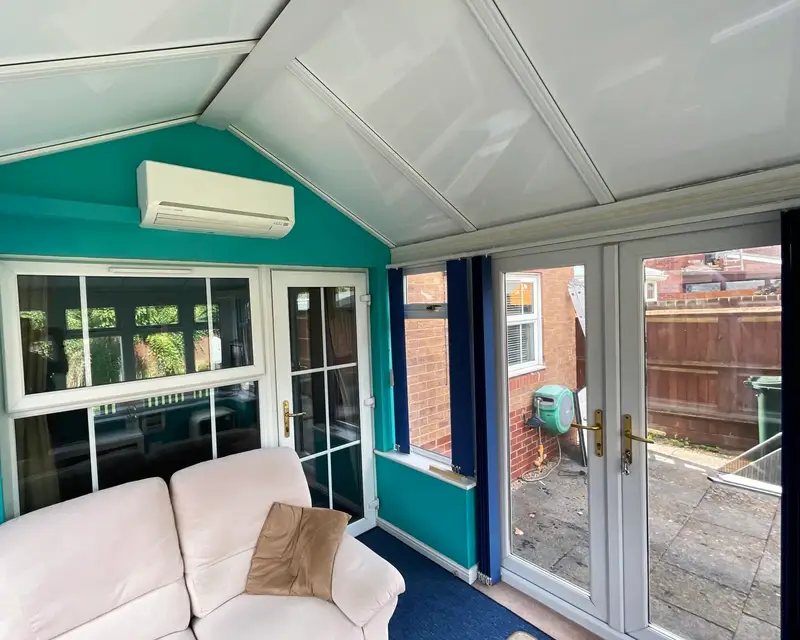
In June the sky is light before 4:30am in most of England. Under a clear roof there is no blind that fully stops it, because roof blinds leave gaps along every bar. Rain is the other wake up call: heavy showers on polycarbonate sound like gravel. A solid roof gives you a dark, quiet ceiling, and blackout blinds on the walls finish the job. There is more on the noise in rain noise on a conservatory roof.
What a new roof does not change
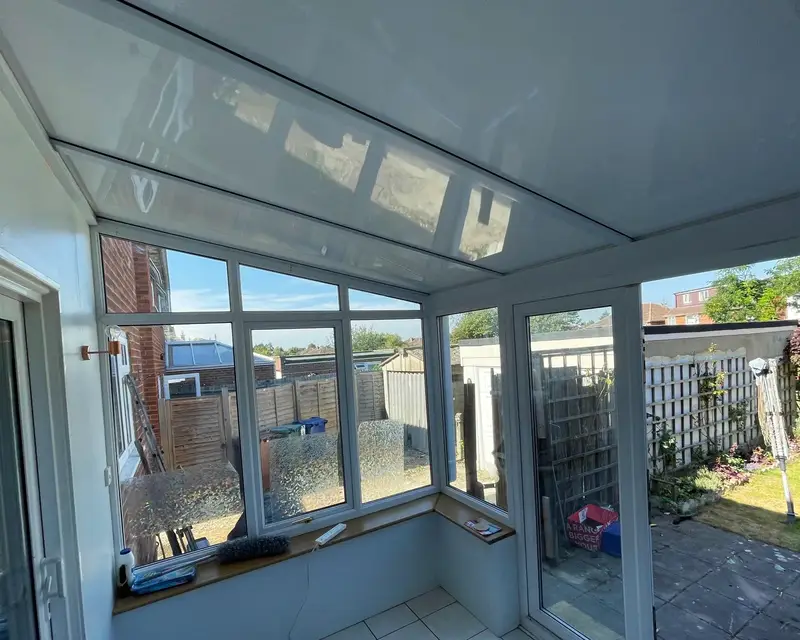
Swapping the roof helps with heat, light and noise. It does not turn the walls to brick. You still need curtains for privacy, the glass still loses heat on cold nights, and a ground floor room with glazed doors needs good locks.